


Charter Flights

Available Fleet

Blog
Contacts


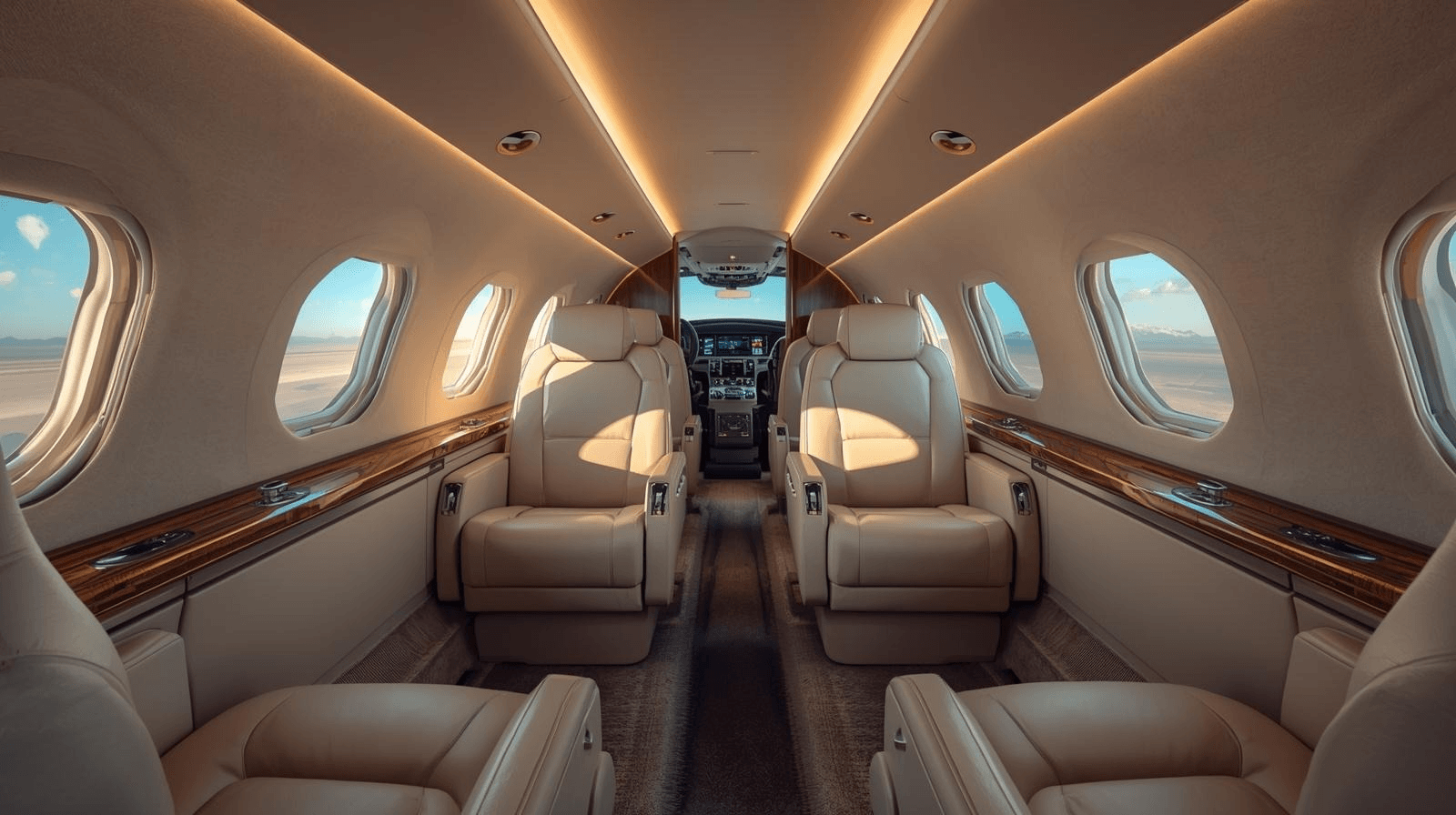
In private aviation, passenger experience is often framed through marketing terms such as "luxury" or "amenity-rich." While these descriptors have appeal, elite operators recognize that the cabin environment is not merely a marketing proposition - it is a strategically engineered system designed to optimize cognitive performance, physiological comfort, and overall well-being.
Private jet passengers, particularly corporate executives and high-stakes decision-makers, operate in an environment where fatigue, cognitive load, and environmental stressors can impact performance immediately upon landing. As such, the cabin becomes an extension of operational infrastructure, where lighting, acoustics, air quality, seating ergonomics, and service protocols are engineered to support human performance and resilience.
This article examines how leading operators approach cabin experience as a performance engineering challenge, integrating scientific principles, human factors, and operational planning to maximize passenger well-being, comfort, and productivity.
Elite private aviation operators treat the cabin not as a static space but as a dynamic, multi-dimensional system. Cabin performance engineering incorporates the following core elements:
Seating, workspace layouts, and cabin geometry are designed to support both comfort and functional performance. Adjustable seating, lumbar support, and modular configurations allow passengers to switch between work, rest, and social interaction seamlessly.
Cabin layout also considers workflow and accessibility, ensuring that service, meal delivery, and storage systems do not impede movement or create cognitive stress.
Aircraft cabins present unique challenges due to low humidity, variable air pressure, and limited ventilation. Elite operators deploy advanced environmental control systems to maintain optimal air quality, temperature, and relative humidity, reducing physiological stressors such as dehydration, nasal congestion, and fatigue.
Some operators incorporate HEPA filtration and ozone removal systems, which reduce exposure to particulates and airborne pathogens, further enhancing passenger health and cognitive readiness.
Lighting is not a cosmetic consideration; it is a performance tool. Circadian lighting systems adjust color temperature, intensity, and distribution to mimic natural daylight cycles, supporting sleep-wake regulation and reducing jet lag.
Advanced cabin lighting systems integrate with window dimming, seat orientation, and personalized zones, allowing passengers to control light exposure, aligning environmental cues with physiological needs.
Cabin acoustics profoundly influence cognitive function and well-being. Excessive noise and vibration increase stress, elevate cortisol levels, and impair concentration. Elite operators invest in soundproofing, vibration dampening, and active noise cancellation technologies.
Acoustic engineering also considers spatial zoning, creating quiet areas for work and relaxation separate from galley or lavatory activity.
Cabin performance engineering extends to nutritional support, recognizing that passenger cognition and physical performance are influenced by meal timing, composition, and hydration.
Passenger well-being is reinforced through behaviorally-informed service protocols. Elite operators implement:
In this context, cabin service is a component of human factors engineering, not a luxury add-on.
Elite operators quantify cabin performance using a combination of physiological, cognitive, and experiential metrics:
Data-driven monitoring allows operators to continuously refine cabin design, environmental controls, and service protocols, creating evidence-based improvements in passenger outcomes.
When approached as a performance engineering problem, cabin experience has profound strategic implications:
Cabin experience is no longer secondary to operational capability; it is an integral dimension of mission success and client satisfaction.
The private aviation industry is increasingly adopting technologically sophisticated and human-centered approaches:
These trends underscore the shift from luxury-centric design to evidence-based performance engineering, where the cabin becomes a tool for human optimization.
In elite private aviation, cabin experience transcends aesthetics or comfort - it is a system engineered for human performance. By integrating ergonomic design, environmental control, circadian lighting, acoustic management, nutrition, and personalized service, operators create an optimized environment for cognitive function, physical well-being, and resilience.
Cabin performance engineering positions the private jet as a strategic operational asset, enabling passengers to maximize productivity, maintain well-being, and arrive prepared for high-stakes engagements. In this framework, passenger experience is quantifiable, data-driven, and strategically integral, elevating the role of cabin design from luxury indulgence to a critical dimension of operational success.
For travelers seeking convenience, comfort, and flexibility, private jet charter flights offer the perfect solution. These flights allow you to tailor every aspect of your journey, from departure times and airports to onboard services, ensuring a seamless and luxurious experience. Whether for business trips or leisure getaways, private jet charter flights provide unmatched privacy, speed, and comfort, letting you reach your destination efficiently while enjoying the highest standards of service.