



Charter Flights

Empty Leg Flights
Available Fleet
Blog
Contacts


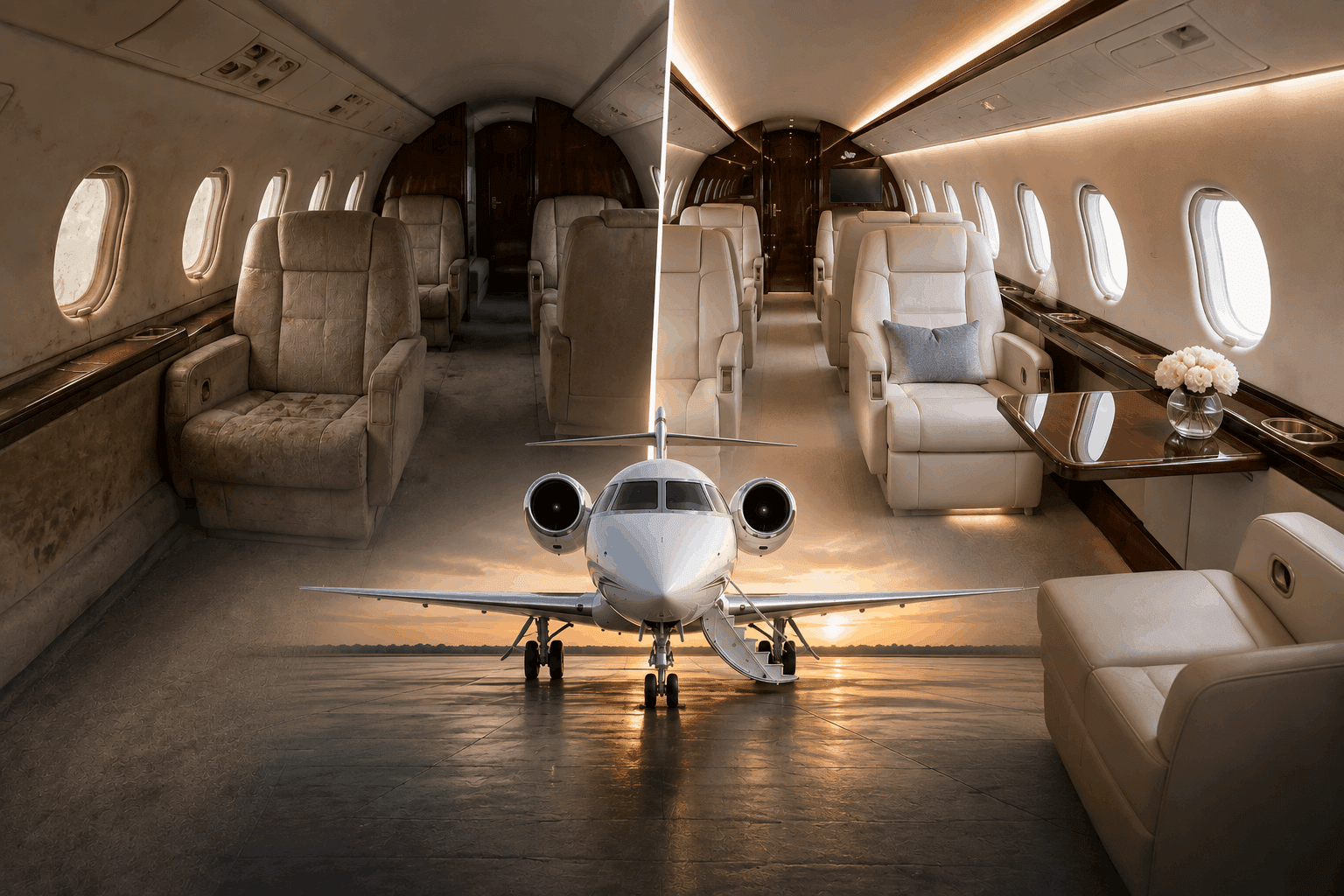
Selling a private jet often raises an important question: should the owner refurbish the cabin before listing the aircraft, or allow the buyer to make those decisions after closing?
There is no universal answer.
Cabin refurbishment can improve first impressions, remove obvious objections, and help an aircraft compete more effectively with similar listings. However, expensive interior work does not automatically produce an equivalent increase in resale value.
A seller can spend heavily on custom leather, veneers, lighting, cabin electronics, or entertainment systems only to discover that the next owner has different preferences.
The strongest resale strategy therefore focuses on improvements that increase marketability across a broad buyer pool rather than highly personalized upgrades.
The objective is not necessarily to create the most luxurious cabin possible. It is to present an aircraft that feels clean, current, functional, properly documented, and consistent with buyer expectations for its market segment.
Aircraft buyers evaluate both technical and passenger-facing condition.
Engines, maintenance records, inspections, and component life determine much of the aircraft’s economic position. The cabin influences how buyers perceive the asset the moment they step aboard.
A worn interior can create concerns even when the aircraft is mechanically strong.
Visible issues such as cracked leather, stained carpet, scratched veneers, broken trim, poor lighting, or outdated cabin electronics can make the jet appear neglected.
This perception can affect negotiations because buyers begin mentally calculating the cost and downtime required to modernize the interior.
A well-maintained cabin reduces those immediate objections.
One of the biggest mistakes sellers make is assuming every dollar spent on refurbishment will be recovered through a higher sale price.
That rarely works on a one-to-one basis.
The return depends on:
A $500,000 cabin project does not automatically make an aircraft worth $500,000 more.
In some cases, it may improve marketability without materially changing valuation.

That can still be useful if the refurbishment shortens time on market or reduces buyer objections.
Not every aircraft needs a complete interior replacement.
A cosmetic refresh can sometimes produce a stronger financial return than a major redesign.
Possible refresh work includes:
These improvements can make the cabin feel significantly newer without requiring a long, expensive refurbishment project.
Full refurbishment may be more appropriate when the existing interior is substantially outdated, heavily worn, or inconsistent with current expectations for the aircraft segment.
The highest-return cabin improvement is often the simplest: professional cleaning and presentation.
A dirty aircraft creates negative impressions regardless of technical condition.
Before listing or showing the jet, sellers should address:
Cleaning is inexpensive relative to most aircraft upgrades.
It also helps buyers evaluate the actual condition rather than being distracted by presentation issues.
Seats are among the first interior elements buyers notice.
Worn leather can show:
Not every seat needs complete replacement.
Professional repair, recoloring, conditioning, or panel replacement may restore appearance at a fraction of full reupholstery cost.
If replacement is necessary, neutral colors generally appeal to a broader buyer audience than highly customized designs.
The goal should be creating a cabin that feels current without making the new owner feel obligated to replace brand-new materials immediately.
Carpet experiences substantial wear in private aircraft cabins.
High-traffic areas can develop:
Replacing carpet can create a surprisingly large visual improvement because it affects the entire cabin.
A neutral, high-quality carpet usually offers better resale appeal than an unusually bold pattern.
The project is relatively straightforward compared with a complete interior replacement, making it one of the upgrades sellers often consider before listing.
Wood veneers and cabinetry contribute significantly to cabin appearance.
Damage can include:
Complete veneer replacement can be expensive and time-consuming.
Minor refinishing or repair may be sufficient when damage is limited.
Buyers generally respond well to cabinetry that appears clean and well maintained, even if it is not brand new.
A seller should therefore evaluate whether repair provides enough visual improvement before committing to a complete redesign.
Lighting has a major influence on perceived cabin quality.
Older lighting can make a perfectly functional interior feel dated.
Potential improvements include:
Lighting upgrades can create a modern appearance without replacing major cabin structures.
However, installations need appropriate approvals and documentation.
A technically correct, well-documented lighting upgrade is more valuable than an inexpensive modification that creates maintenance or certification concerns later.
Cabin management systems control functions such as:
Older systems can become difficult to support as components and software become obsolete.
If the existing cabin-management system is unreliable or unsupported, buyers may view replacement as an immediate future expense.
Modernization can improve resale appeal, particularly in midsize, super-midsize, and large-cabin aircraft.
However, full system replacement can be costly.
The seller should compare expected market benefit with installation cost before proceeding.
Connectivity has become one of the most important passenger expectations in business aviation.
Buyers increasingly expect the aircraft cabin to support productive internet access.
An older connectivity system may reduce appeal, especially in aircraft designed for longer missions.
Upgrading Wi-Fi can improve marketability when:
However, connectivity technology evolves quickly.
A major installation completed immediately before sale can lose value if the buyer prefers another network or solution.
Sellers should therefore focus on systems with broad market acceptance.
Traditional cabin entertainment can still matter, especially on larger aircraft, but its resale importance varies.
Older DVD systems or dated monitors may provide little value.
Modern displays, streaming capability, and simple device integration can create a more contemporary experience.
The key is avoiding overinvestment.
Many passengers now bring their own devices.
A buyer may place more value on strong connectivity and power access than an elaborate built-in entertainment system.
Convenient power access is a relatively modest upgrade that can improve cabin usability.
Modern travelers expect access to:
Older aircraft may have fewer charging options.
Updating cabin power can improve functionality without requiring a complete interior project.
Any modification should still be properly engineered, installed, and documented.
Cabin configuration can influence buyer appeal.
An unusual layout tailored closely to one owner’s needs may limit marketability.
Buyers generally value layouts that support common missions for the aircraft type.
Possible considerations include:
Changing seat configuration immediately before sale can be expensive.
Unless the current layout creates a clear market disadvantage, cosmetic improvements may provide a better return.
Highly personalized interiors can be attractive to the current owner while limiting appeal to future buyers.
Examples include:
A neutral design creates fewer objections.
Common resale-friendly choices include:
The objective is not to make the cabin generic.
It is to create a design that allows buyers to imagine themselves using the aircraft without immediately planning another refurbishment.
The galley deserves attention because buyers notice how well it has been maintained.
Possible issues include:
Minor galley repairs can improve presentation significantly.
A complete galley replacement is rarely necessary solely for resale unless the existing unit is severely worn or functionally obsolete.
Functionality usually matters more than elaborate customization.
Lavatories receive close buyer attention.
Issues such as damaged surfaces, worn fixtures, odors, poor lighting, or malfunctioning equipment can make the overall cabin feel older.
Cleaning and targeted repair are usually worthwhile.
Owners should confirm that systems function properly before showing the aircraft.
A clean, functional lavatory supports the impression that the aircraft has been maintained consistently.
Window condition affects the cabin visually.
Buyers may notice:
Window replacement can be expensive, so sellers should understand whether defects are cosmetic or require technical attention.
Shade repair can be a relatively straightforward improvement.
A cabin with smooth, fully functional shades feels more polished during inspection.
Some owners consider additional soundproofing before resale.
Cabin noise is important, especially on longer flights.
However, soundproofing projects can be expensive and add weight.
Unless noise is a known weakness of the aircraft or the existing insulation has deteriorated, the seller may not recover enough value to justify the project.
This type of modification should generally be evaluated on a model-specific basis.
Cabin upgrades can add aircraft weight.
Heavy materials, entertainment equipment, partitions, and custom cabinetry can increase empty weight and reduce useful load.
This can affect:
A luxurious refurbishment that compromises mission capability may reduce value rather than increase it.
Weight-and-balance implications should therefore be considered before major interior work.
Every significant cabin modification needs appropriate technical documentation.
Depending on the scope, this can include:
An expensive interior with incomplete documentation can become a liability during a pre-purchase inspection.
Sellers should ensure paperwork is as polished as the physical cabin.
Aircraft interiors use materials that must meet applicable aviation requirements.
Seats, carpets, panels, and other cabin materials may require specified flammability characteristics.
This is one reason sellers should use qualified aviation interior facilities rather than general automotive or furniture upholstery providers.
A cabin may look excellent while still creating significant compliance problems if inappropriate materials or undocumented modifications were used.
A complete refurbishment can make sense when:
It may not make sense when:
Technical and market priorities should determine the decision.
A seller should generally avoid spending heavily on cabin cosmetics while ignoring significant maintenance exposure.
Buyers usually place greater financial importance on:
A new carpet cannot compensate economically for engines approaching an expensive shop visit.
Cabin improvements should therefore complement strong technical positioning rather than substitute for it.
A refurbishment decision should be made in the context of the aircraft’s broader market position.
Working with experienced aircraft sales specialists can help an owner compare cabin condition with competing listings, buyer expectations, aircraft maintenance status, and likely transaction economics before committing to a major project.
The key question is not whether a refurbishment would make the aircraft look better.
Almost any new interior will do that.
The more important question is whether the planned work is likely to improve marketability or net sale proceeds enough to justify its cost and downtime.
Before spending money, sellers should examine comparable aircraft currently for sale.
If nearly every competing aircraft has recently refurbished interiors, a dated cabin may become a significant disadvantage.
If comparable inventory is similarly configured, a major upgrade may be unnecessary.
Useful comparison points include:
Market comparison helps determine whether the cabin is truly a weakness or simply reflects normal aircraft age.
Refurbishment takes time.
A significant cabin project can delay listing by weeks or months.
During that period:
The expected resale benefit should therefore account for both project cost and sale delay.
In a strong seller’s market, listing immediately may be more valuable than waiting for a complete refurbishment.
Some buyers prefer aircraft that are already turn-key.
Others specifically want to customize the cabin.
This is particularly common with older or larger aircraft where buyers expect a refurbishment project.
In these situations, installing an expensive new cabin can create limited additional value because the buyer may replace parts of it anyway.
The seller may be better served by repairing obvious defects and pricing the aircraft appropriately.
Before deciding what to upgrade, owners should conduct a systematic cabin review.
Potential categories include:
This prioritization prevents cosmetic spending from distracting from more important problems.
A buyer is likely to distinguish between an older cabin and a cabin with equipment that simply does not work.
Broken components create greater concern.
Before listing, sellers should consider addressing:
Functional correction generally provides better resale value than replacing working equipment solely because it is not the newest design.
Small defects can create an impression of neglect.
Examples include:
Individually, these items may be inexpensive.
Collectively, they can make buyers question how the rest of the aircraft has been maintained.
Correcting them before showings can improve presentation significantly.
Aircraft listings increasingly depend on high-quality digital photography.
Dark, cluttered, or heavily personalized cabins can appear smaller online.
A clean, neutral interior typically photographs more effectively.
Before photography:
Good presentation cannot replace technical condition, but it helps attract buyers to inspect the aircraft in person.
Carpet replacement often makes sense when existing flooring is visibly worn or stained.
It can modernize the entire cabin at a lower cost than full refurbishment.
If the existing carpet remains clean and in good condition, replacement may provide little additional value.
The decision should be based on actual condition rather than age alone.
Seat reupholstery can be worthwhile when leather is heavily worn.
However, repairing or recoloring existing leather may be sufficient.
Full reupholstery becomes more attractive when:
Neutral replacement materials generally offer the broadest resale appeal.
Connectivity is one of the cabin improvements most likely to influence buyers of larger business jets.
However, the economics depend on the aircraft segment and current system.
An upgrade can make sense if the installed solution is effectively obsolete.
If the existing system remains capable and supported, replacing it solely before sale may not produce enough additional value.
Electronics should generally be upgraded when obsolescence materially affects usability.
Examples include systems that:
Purely cosmetic technology replacement should be evaluated carefully.
Buyers may prefer to select their own solution.
Buyers evaluate the whole aircraft.
A beautifully refurbished cabin paired with severely faded paint can create an inconsistent impression.
Likewise, fresh paint with a neglected interior may not achieve maximum marketability.
Sellers should evaluate the aircraft as a complete presentation package.
In some cases, modest improvement to both interior and exterior creates more value than an extravagant cabin project alone.
Interior projects should be incorporated properly into the aircraft records.
Buyers may request documentation showing:
Organized documentation increases confidence that the refurbishment was performed professionally.
Recent refurbishment may include warranties from the interior facility or equipment manufacturers.
Transferability can add convenience for the buyer.
Sellers should retain warranty documentation and include relevant information in the transaction records.
A buyer may value knowing that a recently installed cabin system still has support available.
Aircraft ownership periods can extend for years.
Interior design trends can change quickly.
A cabin that appears fashionable today may feel dated several years later.
Pre-sale refurbishment should therefore prioritize timeless design.
Neutral colors, quality materials, simple lighting, and functional technology tend to age better than highly trend-driven themes.
Premium leather, rare veneers, custom fabrics, and elaborate finishes can create an impressive cabin.
They can also add significant cost.
The next buyer may not value those materials enough to pay a corresponding premium.
The resale objective should be broad desirability rather than maximum material cost.
Different aircraft categories have different buyer expectations.
Buyers may prioritize operating cost, maintenance, avionics, and practical cabin condition over elaborate interior customization.
Connectivity, cabin-management systems, seating quality, and overall finish can become more important.
Buyers may expect premium interiors, modern technology, sleeping capability, high-quality connectivity, and sophisticated cabin systems.
Refurbishment strategy should reflect the aircraft’s competitive segment.
International buyers may have different preferences regarding:
A neutral interior is generally easier to market globally.
Highly regional or owner-specific modifications may narrow the buyer pool.
The return on refurbishment should include more than expected sale-price increase.
Potential benefits include:
Potential costs include:
A decision should be based on net transaction economics.
Selling without major refurbishment can be sensible when:
An honest as-is presentation can sometimes create more value than an expensive speculative renovation.
Refurbishment may offer better economics when the cabin:
In those situations, improvement can remove a clear sales barrier.
A practical pre-sale refurbishment plan can follow this sequence:
This sequence helps protect capital.
It can improve marketability and sometimes sale value, but owners should not assume that every dollar spent will be recovered. The return depends on aircraft type, cabin condition, market expectations, and refurbishment cost.
There is no universal answer, but cleaning, repairing visible defects, refreshing worn leather, replacing damaged carpet, and ensuring cabin systems function correctly often provide strong value relative to cost.
Not necessarily. A full refurbishment can be expensive, and buyers may prefer their own design. A targeted cosmetic refresh is often more economically efficient when the existing cabin remains functional.
Modern connectivity can improve buyer appeal, particularly in larger aircraft. The value depends on whether the current system is supported, capable, and appropriate for the aircraft’s market segment.
Generally, neutral colors appeal to a broader buyer pool and reduce the likelihood that a prospective owner immediately plans another refurbishment.
Usually yes when significant technical work is due. Engine status, inspections, airworthiness, records, and major maintenance exposure typically have greater economic importance than purely cosmetic improvements.
New carpet can substantially improve presentation when the existing flooring is worn or stained. If current carpet remains in good condition, replacement may provide limited additional return.
Yes. Significant cabin modifications should have appropriate technical documentation, approvals, equipment records, and weight-and-balance updates where applicable.
Selling as-is can make sense when the cabin is functional, the aircraft is priced appropriately, buyers are likely to customize the interior, or the cost and downtime of refurbishment are unlikely to be recovered.
Cabin refurbishment can improve the resale position of a private jet, but the most expensive project is not necessarily the most valuable one.
Buyers ultimately evaluate the aircraft as a complete asset.
Maintenance history, engine condition, APU status, inspection timing, avionics, records, cabin functionality, exterior condition, and market demand all interact with interior quality.
For sellers, the most effective cabin strategy is usually selective.
Broken equipment should be repaired. Obvious cosmetic damage should be addressed. Leather, carpet, cabinetry, lighting, and connectivity should be evaluated according to actual buyer expectations for the aircraft segment.
Highly personalized and expensive upgrades deserve greater caution.
A buyer may appreciate a clean, modern cabin without assigning significant value to exotic materials or a design chosen specifically for the previous owner.
The objective should therefore be to remove barriers to the sale rather than create an entirely new aircraft interior at any cost.
When refurbishment decisions are based on comparable listings, technical condition, buyer preferences, project cost, and expected market benefit, sellers can improve presentation while protecting the economics of the transaction.