



Charter Flights

Empty Leg Flights
Available Fleet
Blog
Contacts


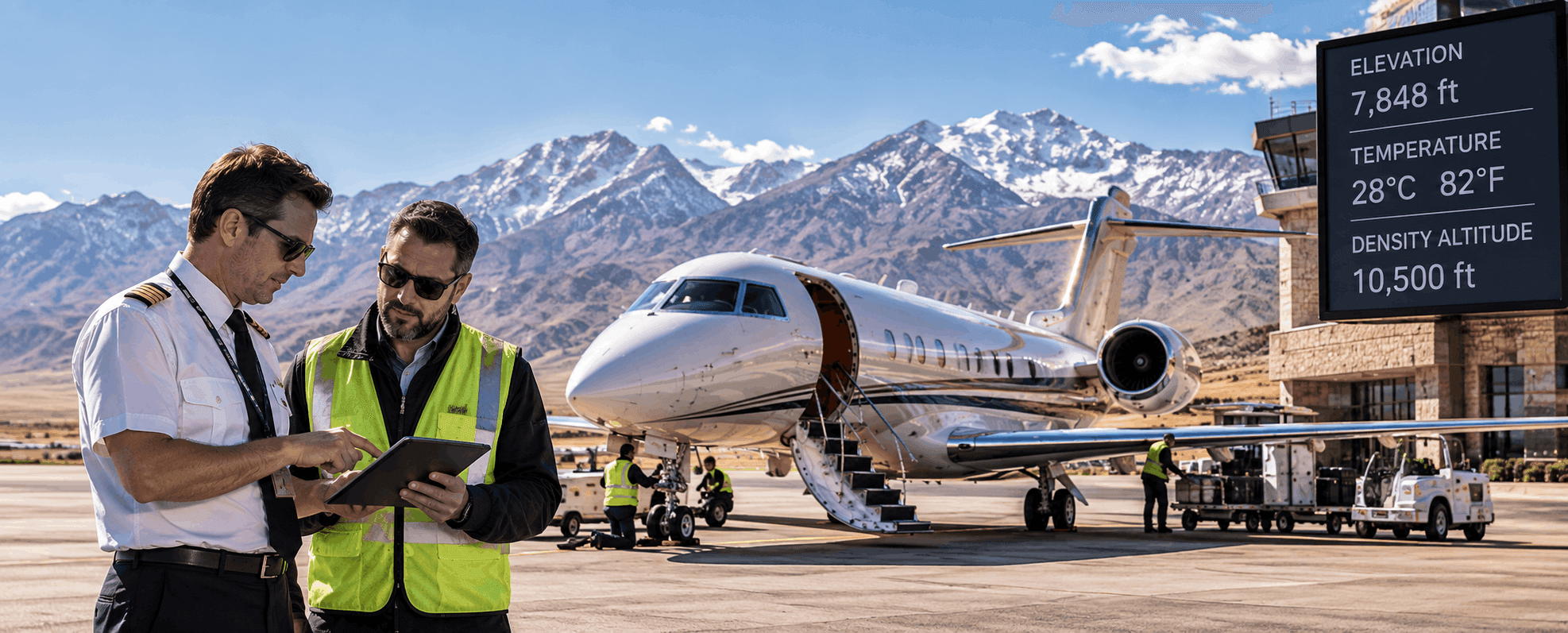
Private jets are designed to operate in a wide range of conditions, but not every airport presents the same performance environment. Two factors that can significantly affect an aircraft’s capabilities are temperature and elevation.
When an airport is both hot and located at a high elevation, aircraft performance can be reduced. These conditions may affect takeoff distance, climb performance, allowable takeoff weight, fuel planning, and even whether a nonstop flight is practical.
In aviation, “hot-and-high” refers to conditions where an airport is located at a relatively high elevation and is also experiencing high temperatures. Both factors reduce air density.
At higher elevations, the atmosphere is naturally thinner. Hot temperatures reduce air density further. This combination creates what pilots and operators refer to as a higher density altitude.
Aircraft rely on air for both lift and engine performance. When the air is less dense, wings may generate less lift for a given speed, and engines may produce less effective performance.
This means the aircraft may need a longer takeoff roll and more distance to climb after leaving the runway. The effect can be especially important at airports surrounded by terrain or where runway length is limited.
At higher elevations, the aircraft may accelerate less effectively and require more runway before becoming airborne. Climb performance can also be reduced after takeoff.
The aircraft must not only leave the runway safely but also meet required performance criteria after departure. If surrounding terrain is significant, those requirements can become even more important.
A jet departing early in the morning when temperatures are cooler may have better performance margins than the same aircraft departing during the hottest part of the afternoon.
This is why departure time can sometimes influence flight planning. On particularly hot days, operators may recommend an earlier departure because cooler conditions can allow the aircraft to carry more fuel or payload.
A lighter aircraft generally requires less runway and can climb more effectively. If the aircraft is too heavy for the conditions, the crew may need to reduce the load before departure.
This can mean carrying less fuel, reducing baggage, limiting passenger payload, or choosing a different aircraft. In many cases, carrying less fuel and making a planned fuel stop is the most practical solution.
Long-range flights require significant amounts of fuel, and fuel adds substantial weight. At a hot-and-high airport, the aircraft may not be able to depart safely at the maximum weight required for a long nonstop mission.
The crew may therefore load enough fuel to depart within performance limits, fly to another airport with more favorable conditions, refuel, and continue the journey. The limitation may come from takeoff performance rather than fuel capacity.
Every passenger and bag contributes to the aircraft’s takeoff weight. At a high-elevation airport on a hot day, a large group traveling with heavy luggage, skis, golf equipment, or other gear may reduce the amount of fuel the aircraft can carry.
Accurate passenger and baggage information is therefore particularly important for these missions.
Some high-elevation airports have long runways designed to compensate for reduced aircraft performance. Others may have more restrictive runway lengths.
A private jet that can operate comfortably from a long runway may face limitations at a shorter airport under the same temperature and elevation conditions. Operators calculate takeoff performance for the actual runway being used.
Many high-elevation airports are located in mountainous regions. Mountain terrain, obstacle clearance, and local departure procedures can all affect allowable aircraft weight.
Even when the runway itself is long enough, terrain beyond the airport may become the limiting factor. Flight crews account for these requirements when determining whether the aircraft can safely complete the departure.
Wind direction and speed can influence aircraft performance. A strong headwind during takeoff may improve performance, while a tailwind can make conditions more restrictive.
Runway condition matters as well. A wet or contaminated runway can require additional takeoff distance. Because these conditions change, performance calculations are completed for the specific flight.
Some private jets are designed to operate particularly well from shorter runways or high-elevation airports. Others may prioritize long-range capability and cabin size but require more runway at heavier weights.
This is why aircraft selection should consider more than passenger capacity and range. The jet that is ideal for a long flight from a sea-level airport may not be the best option for the same route from a high-altitude mountain airport.
When temperatures are a limiting factor, changing the departure time may improve performance. Early-morning flights often benefit from cooler temperatures.
In some cases, moving a departure by several hours can increase the aircraft’s allowable takeoff weight enough to reduce or eliminate the need for a fuel stop.
Published aircraft specifications do not tell the entire story. A jet may have enough range for a route on paper while real-world conditions limit how much weight it can safely carry from a particular airport.
High elevation and hot temperatures can reduce takeoff performance, making fuel stops, payload adjustments, or schedule changes necessary. These decisions are part of responsible flight planning and help keep the mission within the aircraft’s operating capabilities.