



Charter Flights

Empty Leg Flights
Available Fleet
Blog
Contacts


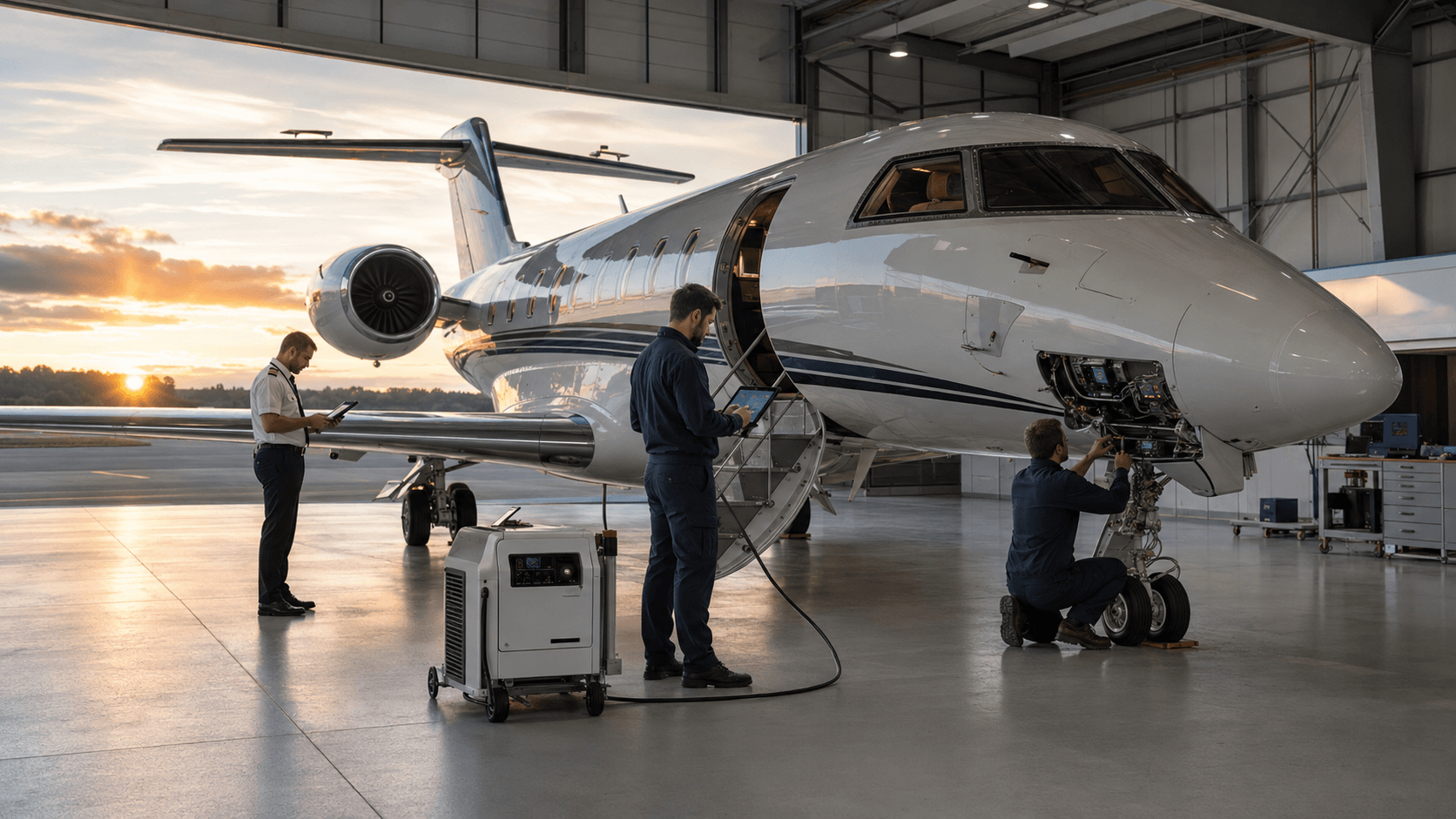
Private aviation has long represented the pinnacle of convenience, flexibility, and personalized travel. For decades, the industry distinguished itself through exclusive access, time efficiency, and exceptional customer service. Today, however, private aviation is experiencing a profound transformation driven by technological innovation. Emerging technologies are redefining how aircraft are operated, managed, maintained, and experienced by passengers.
From artificial intelligence and predictive analytics to connected aircraft and sustainable aviation solutions, technology is reshaping every stage of the private aviation ecosystem. These advancements are enabling operators to improve efficiency, enhance safety, reduce operational costs, and deliver increasingly personalized experiences for travelers.
As the aviation industry enters a new era of digital transformation, private aviation is emerging as one of the sector's most innovative segments, leveraging cutting-edge technologies to meet the evolving expectations of modern travelers and aircraft owners.
The adoption of digital technologies has fundamentally changed the way private aviation services are delivered. Historically, charter bookings, flight coordination, and operational planning relied heavily on manual processes and direct communication. While personalized service remains essential, modern digital platforms have streamlined many aspects of the customer journey.
Today, travelers can request charter quotes, compare aircraft options, manage itineraries, and communicate with aviation specialists through sophisticated web and mobile applications. Digital solutions have significantly improved accessibility, transparency, and responsiveness across the industry.
For operators, digitalization facilitates more efficient fleet management, customer relationship management, and operational oversight. By integrating data across multiple systems, companies can optimize resource allocation and improve service delivery while maintaining the personalized experience that defines private aviation.
Artificial intelligence (AI) is rapidly becoming one of the most influential technologies in aviation. Its ability to analyze vast quantities of operational data enables more informed and efficient decision-making across a wide range of aviation functions.
AI-powered flight planning systems can evaluate weather conditions, airspace restrictions, airport congestion, fuel requirements, and aircraft performance simultaneously. This allows operators to identify optimal flight routes that minimize travel time, reduce fuel consumption, and improve overall operational efficiency.
In addition to flight planning, artificial intelligence supports demand forecasting, scheduling optimization, and customer service automation. Advanced algorithms can predict travel trends, improve aircraft utilization, and assist operators in managing complex logistical challenges.
As machine learning technologies continue to mature, artificial intelligence will play an increasingly important role in enhancing operational performance and delivering superior customer experiences.
Aircraft maintenance has traditionally been based on scheduled inspections and predefined service intervals. While this approach remains essential, modern technology has introduced a more proactive strategy known as predictive maintenance.
Advanced sensors installed throughout aircraft continuously monitor the condition of critical systems and components. These sensors generate real-time data that can be analyzed using sophisticated software to identify performance anomalies and predict potential maintenance requirements before failures occur.
Predictive maintenance provides significant benefits for both operators and aircraft owners. By addressing issues before they develop into serious problems, operators can reduce unscheduled downtime, improve fleet availability, and enhance overall safety.
Moreover, predictive maintenance contributes to cost efficiency by enabling maintenance activities to be performed when they are genuinely needed rather than solely according to fixed schedules. This data-driven approach represents a significant advancement in aircraft asset management.
Connectivity has become an essential component of modern private aviation. Advances in satellite communication technology now allow aircraft to remain continuously connected throughout their journeys.
For passengers, high-speed internet connectivity transforms the aircraft cabin into a productive and connected workspace. Business travelers can participate in video conferences, access cloud-based applications, communicate with colleagues, and remain engaged with ongoing projects regardless of location.
For operators, connected aircraft provide valuable operational intelligence. Real-time data transmission enables continuous monitoring of aircraft systems, maintenance status, flight performance, and operational conditions.
This connectivity facilitates faster decision-making, more efficient resource management, and improved customer service. As data transmission capabilities continue to improve, connected aircraft will become increasingly central to aviation operations.
Technology is also revolutionizing aircraft ownership and management. Modern aircraft management platforms provide unprecedented visibility into operational performance, maintenance activities, regulatory compliance, and financial reporting.
Through centralized digital dashboards, aircraft owners can access detailed information regarding utilization rates, maintenance schedules, operational expenses, and charter revenue opportunities. These insights enable more informed decision-making and greater control over aircraft assets.
Advanced management systems also simplify administrative processes by automating scheduling, maintenance tracking, crew coordination, and documentation management. This improves efficiency while reducing administrative burdens for owners and operators alike.
As private aviation becomes increasingly data-driven, sophisticated aircraft management technologies will continue to play a critical role in maximizing operational performance and asset value.
Environmental sustainability has become a major priority throughout the aviation industry. While private aviation represents a relatively small portion of global aviation activity, industry stakeholders are actively investing in technologies designed to reduce environmental impact.
One of the most significant developments is the adoption of Sustainable Aviation Fuel (SAF). Produced from renewable and waste-derived feedstocks, SAF can significantly reduce lifecycle carbon emissions compared to conventional jet fuel while requiring minimal modifications to existing aircraft infrastructure.
Aircraft manufacturers are also developing more fuel-efficient engines, lightweight composite materials, and aerodynamic designs that reduce fuel consumption and emissions.
Looking further ahead, emerging technologies such as hybrid-electric propulsion systems, hydrogen-powered aircraft, and advanced battery technologies have the potential to transform regional aviation markets. While widespread implementation remains years away, these innovations demonstrate the industry's commitment to long-term sustainability.
Technology is not only improving operational efficiency but also enhancing the passenger experience. Modern travelers increasingly expect seamless, personalized, and digitally enabled services throughout their journeys.
Advanced customer relationship management systems allow operators to anticipate passenger preferences and deliver tailored experiences. From preferred catering selections and cabin configurations to ground transportation arrangements and personalized amenities, technology supports a higher degree of customization than ever before.
Mobile applications and digital communication platforms provide travelers with real-time flight updates, itinerary management capabilities, and direct access to aviation professionals. These tools create a more convenient and transparent travel experience while reinforcing the high-service standards associated with private aviation.
As customer expectations continue to evolve, technology will remain a key differentiator for private aviation providers seeking to deliver exceptional service.
The future of private aviation will be shaped by the continued integration of artificial intelligence, automation, connectivity, and sustainable technologies. Industry leaders are increasingly investing in digital transformation initiatives that improve efficiency, strengthen safety, and enhance customer satisfaction.
Future developments may include more autonomous operational systems, advanced predictive analytics, expanded use of sustainable fuels, and next-generation propulsion technologies. These innovations will help create a more connected, efficient, and environmentally responsible aviation ecosystem.
While technology will continue to evolve rapidly, the defining characteristic of private aviation will remain unchanged: providing exceptional travel experiences tailored to the unique needs of each client. Technology serves not as a replacement for personalized service but as a powerful tool that enables operators to deliver greater value, reliability, and convenience.
Technology is fundamentally transforming private aviation. From artificial intelligence and predictive maintenance to connected aircraft and sustainable aviation solutions, innovation is reshaping how private aviation services are delivered and experienced.
As digital transformation accelerates, private aviation operators that embrace advanced technologies will be better positioned to enhance operational performance, improve safety, reduce environmental impact, and exceed customer expectations.
The future of private aviation lies at the intersection of technological innovation and personalized service. Together, these forces are creating a new era of intelligent, efficient, and highly sophisticated air travel.
Technology is improving operational efficiency, safety, connectivity, sustainability, and customer experience through innovations such as artificial intelligence, predictive maintenance, and digital booking platforms.
Artificial intelligence helps optimize flight planning, improve scheduling, support predictive maintenance, analyze operational data, and enhance customer service.
Predictive maintenance uses aircraft sensors and real-time data analysis to identify potential technical issues before they become operational problems.
Connected aircraft provide continuous communication between aircraft and ground teams, enabling real-time monitoring, faster decision-making, and enhanced passenger connectivity.
Connectivity allows passengers to remain productive during flights through internet access, video conferencing, cloud applications, and real-time communications.
Digital platforms provide faster quotations, streamlined booking processes, real-time updates, and improved transparency throughout the travel experience.
Advanced avionics, predictive maintenance systems, AI-powered analytics, weather monitoring tools, and real-time aircraft diagnostics all contribute to improved safety outcomes.
SAF is a renewable aviation fuel designed to reduce lifecycle carbon emissions while remaining compatible with existing aircraft and airport infrastructure.
Modern aircraft management platforms offer real-time visibility into maintenance, operations, compliance, scheduling, and financial performance.
Electric aircraft are expected to play a growing role in regional and short-haul aviation as battery technology and propulsion systems continue to advance.
Technology enables personalized services, digital itinerary management, real-time flight updates, and seamless communication between travelers and operators.
The future will likely include greater use of AI, automation, advanced connectivity, sustainable propulsion systems, predictive analytics, and increasingly personalized travel experiences.