


Charter Flights

Available Fleet

Blog
Contacts


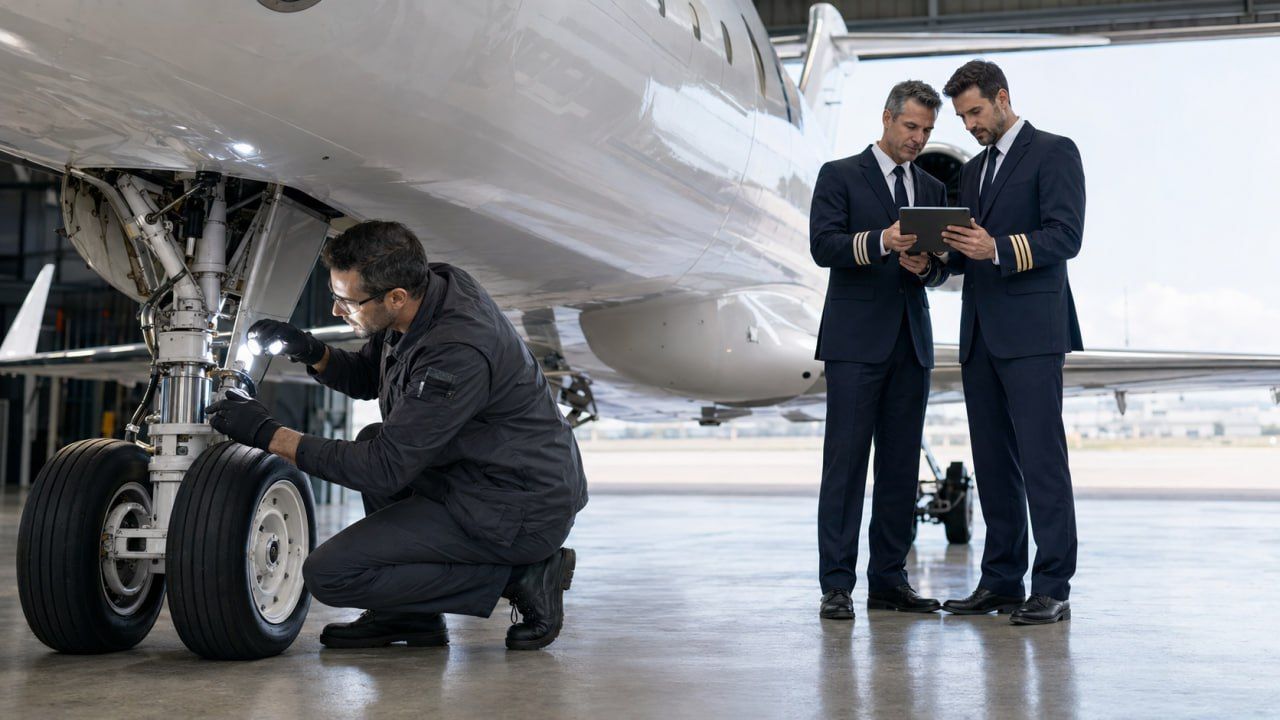
In an increasingly globalized and competitive business environment, efficient mobility has become a strategic necessity rather than a convenience. Organizations of all sizes operate across multiple markets, manage geographically dispersed teams, and pursue opportunities that require rapid access to clients, facilities, partners, and stakeholders. As a result, corporate travel remains a critical component of modern business operations.
While commercial airlines continue to serve an important role in global transportation, many organizations are turning to private aviation as a more efficient and flexible solution for executive and corporate travel. Contrary to common perceptions, private aviation is not simply a luxury reserved for large multinational corporations or ultra-high-net-worth individuals. For many businesses, it is a strategic tool that improves productivity, enhances decision-making, reduces travel-related inefficiencies, and supports organizational growth.
Private aviation enables companies to maximize one of their most valuable resources: time. By providing direct access to destinations, flexible scheduling, enhanced privacy, and a highly personalized travel experience, private aircraft help organizations operate more effectively in an increasingly fast-paced business landscape.
As technology, globalization, and market competition continue to reshape corporate operations, private aviation is becoming an increasingly important element of executive mobility strategies.
Corporate travel has changed significantly over the past two decades.
Global expansion, remote workforce management, supply chain complexity, and increasing customer expectations have created new mobility challenges for businesses. Executives are expected to manage operations across multiple cities, countries, and continents while maintaining productivity and responsiveness.
At the same time, commercial air travel has become increasingly constrained by:
These challenges can create significant inefficiencies for organizations that depend on rapid decision-making and face-to-face engagement.
Private aviation addresses many of these limitations by allowing businesses to align travel schedules with operational priorities rather than airline timetables.
For organizations operating in highly competitive industries, this flexibility can provide meaningful strategic advantages.
Time is among the most valuable assets available to any organization.
Senior executives, business owners, investors, and leadership teams often manage schedules where delays can result in lost opportunities, reduced productivity, and increased operational costs.
Traditional commercial travel involves numerous time-consuming processes, including:
Private aviation significantly reduces these inefficiencies.
Passengers typically arrive at a private terminal 15 to 30 minutes before departure and board directly upon arrival. Upon landing, they can immediately proceed to meetings, facilities, or accommodations without navigating crowded terminals.
These efficiencies often save several hours per trip.
For organizations conducting hundreds of executive travel missions annually, the cumulative productivity gains can be substantial.
One of the most significant advantages of private aviation is access.
Commercial airlines primarily serve major airports and operate according to predetermined route networks. However, many business opportunities exist far from these hubs.
Private aircraft can access thousands of airports worldwide, including:
This expanded airport network allows executives to travel closer to their actual destinations, reducing ground transportation requirements and increasing overall efficiency.
For organizations operating in industries such as manufacturing, energy, healthcare, construction, mining, and technology, this accessibility can be a major operational advantage.
Travel time does not have to be unproductive time.
Private aircraft provide secure and comfortable environments where executives can continue working throughout the journey.
Corporate travelers frequently use flight time for:
Unlike commercial flights, private aircraft allow leadership teams to communicate freely without concerns regarding confidentiality or interruptions.
Modern business jets increasingly function as mobile offices equipped with:
This environment enables executives to remain productive before, during, and after travel.
Confidentiality is a critical consideration for many organizations.
Executives routinely discuss sensitive matters involving:
Commercial airline cabins offer limited privacy for these conversations.
Private aviation provides a controlled environment where confidential discussions can occur without external observation.
For public companies, investment firms, legal professionals, government contractors, and technology organizations, this privacy can be invaluable.
In many cases, private aviation supports not only convenience but also corporate governance and risk management objectives.
Business opportunities rarely emerge according to airline schedules.
Organizations often encounter situations requiring immediate travel, including:
Private aviation enables companies to respond quickly to these developments.
Flights can often be arranged within hours, schedules can be modified when circumstances change, and multiple destinations can be incorporated into a single itinerary.
This flexibility supports organizational agility and helps businesses capitalize on opportunities that might otherwise be difficult to pursue.
For many executives, schedule control is among the most valuable benefits private aviation provides.
Corporate travel frequently involves visits to multiple locations within a compressed timeframe.
For example, a leadership team may need to:
Attempting to complete these activities using commercial airlines may require overnight stays, multiple connections, and significant logistical complexity.
Private aviation allows organizations to create customized itineraries that maximize efficiency.
Multiple destinations can often be visited within a single day, reducing travel time while increasing productivity.
This capability is particularly valuable for organizations with geographically dispersed operations.
Face-to-face interaction remains essential in many business relationships.
Despite advances in digital communication, in-person meetings continue to play a critical role in:
Private aviation allows executives to reach customers, investors, and stakeholders more efficiently, often enabling meetings that would otherwise be impractical due to scheduling constraints.
The ability to maintain strong personal relationships can have a direct impact on revenue growth, investment opportunities, and long-term business success.
Travel disruptions can significantly affect business operations.
Commercial airline delays, cancellations, labor actions, weather events, and airport congestion can create uncertainty and negatively impact critical business activities.
Private aviation provides greater operational control and reduces exposure to many common travel disruptions.
Benefits include:
For organizations with time-sensitive operations, private aviation can serve as an important component of broader business continuity and risk management strategies.
Frequent travel can create significant physical and mental strain.
Long airport queues, flight delays, crowded terminals, and overnight connections often contribute to fatigue and reduced performance.
Private aviation improves the travel experience by offering:
By minimizing travel-related fatigue, organizations help executives and key personnel maintain higher levels of performance and effectiveness.
Employee well-being is increasingly recognized as an important factor in organizational success, and efficient travel solutions can contribute meaningfully to that objective.
One of the most common misconceptions about private aviation is that it should be evaluated solely on direct transportation costs.
Sophisticated organizations often take a broader view.
Rather than focusing exclusively on charter expenses, they evaluate:
For example, if private aviation enables a leadership team to complete multiple high-value meetings in a single day, the economic benefits may substantially outweigh the transportation cost.
In this context, private aviation is often viewed as an investment in business performance rather than a discretionary luxury expense.
Organizations today can choose from several private aviation access models.
Provides maximum flexibility with no long-term commitments.
Offer prepaid flight hours and predictable pricing structures.
Allows organizations to acquire a share of an aircraft while sharing operating costs.
Provides maximum control and availability for organizations with extensive flight requirements.
Each model offers distinct advantages depending on travel frequency, budget, and operational needs.
Digital innovation is making private aviation more accessible and efficient.
Modern aviation platforms now offer:
These technologies simplify travel planning while improving transparency and operational efficiency.
As digital tools continue to evolve, corporate travelers will gain even greater visibility and control over their aviation resources.
Environmental responsibility has become an important consideration for many organizations.
The private aviation industry is actively pursuing sustainability initiatives through:
Businesses increasingly seek aviation partners that support broader environmental objectives while maintaining operational effectiveness.
As sustainability expectations continue to evolve, environmentally responsible aviation practices will play a growing role in corporate travel decision-making.
The future of corporate travel will be shaped by several major trends.
These include:
Organizations will continue expanding across international markets.
Executives will require increasingly adaptable travel solutions.
Artificial intelligence and automation will streamline planning and booking processes.
Environmental considerations will become increasingly important.
Travel experiences will become more tailored to individual and organizational preferences.
Private aviation is well positioned to address these evolving requirements.
Private aviation has become far more than a luxury travel option. For many organizations, it serves as a strategic business tool that enhances productivity, supports decision-making, improves mobility, and strengthens competitive positioning.
By reducing travel inefficiencies, expanding airport access, protecting confidentiality, and enabling greater schedule flexibility, private aviation helps organizations maximize the value of executive time while supporting broader business objectives.
As global commerce becomes increasingly dynamic and interconnected, efficient mobility will remain a critical factor in organizational success. Businesses that leverage private aviation effectively can gain meaningful advantages in responsiveness, productivity, and operational performance.
For modern corporations seeking to optimize executive travel, private aviation continues to represent one of the most effective and flexible mobility solutions available.
Organizations utilize private aviation because it offers a level of efficiency, flexibility, and operational control that commercial airlines often cannot provide. In today's fast-paced business environment, executives frequently need to visit multiple locations within a short period, respond rapidly to emerging opportunities, and maintain productivity while traveling. Private aviation allows companies to create customized itineraries, avoid lengthy airport procedures, and access destinations that may not be served by commercial carriers.
Beyond convenience, private aviation helps businesses maximize executive time, reduce travel-related fatigue, improve schedule reliability, and facilitate face-to-face interactions with clients, investors, and partners. For many organizations, private aviation is not viewed as a luxury expense but rather as a strategic business tool that supports growth, decision-making, and operational effectiveness.
No. While large multinational corporations have historically been significant users of private aviation, today's market offers solutions suitable for businesses of virtually every size. Advances in charter services, jet card programs, membership-based aviation platforms, and shared access models have made private aviation considerably more accessible than in the past.
Small and medium-sized enterprises often utilize private aviation for important client meetings, site inspections, executive travel, investor presentations, and business development initiatives. Companies no longer need to own an aircraft to benefit from private aviation. Instead, they can access private aircraft on an as-needed basis, allowing them to enjoy the advantages of private travel without the financial commitments associated with ownership.
As a result, private aviation has evolved into a practical mobility solution for organizations across a wide range of industries and operational scales.
Private aircraft are often described as mobile offices because they allow executives to remain productive throughout the travel process. Unlike commercial flights, where privacy is limited and interruptions are common, private aviation provides a secure and controlled environment that supports focused work and collaboration.
Executives can conduct meetings, review confidential documents, participate in video conferences, negotiate transactions, and develop strategic plans while in transit. Leadership teams traveling together can use flight time for productive discussions that might otherwise require separate meetings.
Furthermore, private aviation eliminates many of the inefficiencies associated with commercial travel, including extended airport wait times, flight connections, and schedule constraints. The result is more time available for business activities and a greater ability to maintain momentum throughout demanding travel schedules.
Yes. One of the most significant advantages of private aviation is access to a vastly larger network of airports. While commercial airlines primarily operate from major hubs and regional airports with sufficient passenger demand, private aircraft can access thousands of additional airports around the world.
This expanded airport access enables travelers to land significantly closer to their final destinations, reducing ground transportation times and increasing overall efficiency. Business leaders can visit manufacturing facilities, energy sites, research centers, construction projects, and regional offices that may be located far from commercial airline routes.
In many cases, the ability to utilize smaller airports can save several hours on a single trip, making private aviation particularly valuable for organizations operating across geographically dispersed markets.
Privacy is a critical consideration for many organizations because executives frequently handle highly sensitive information during travel. Discussions involving mergers and acquisitions, financial performance, legal matters, intellectual property, strategic initiatives, and personnel decisions often require strict confidentiality.
Commercial airline cabins provide limited privacy and may expose conversations or documents to unintended audiences. Private aviation creates a secure environment where executives can communicate openly without concern for public observation or interruption.
For publicly traded companies, investment firms, legal practices, healthcare organizations, and technology companies, maintaining confidentiality can be essential to protecting competitive advantages and complying with regulatory obligations. As a result, privacy is often viewed as one of the most valuable benefits of private aviation.
Private aviation enhances business continuity by providing organizations with greater control over their mobility and travel operations. Commercial airline networks can be affected by delays, cancellations, labor disputes, weather disruptions, airport congestion, and other external factors that may significantly impact travel plans.
Private aviation offers alternative routing options, flexible scheduling, and access to a broader network of airports, enabling businesses to maintain critical travel activities even during periods of disruption.
This capability can be particularly valuable during emergencies, crisis management situations, supply chain disruptions, or periods of economic uncertainty. By reducing dependency on commercial airline schedules and infrastructure, private aviation helps organizations maintain operational resilience and respond more effectively to changing circumstances.
Private aviation serves a wide range of industries, particularly those that depend on executive mobility, rapid decision-making, and access to geographically dispersed operations.
Industries that frequently utilize private aviation include:
In these sectors, private aviation often facilitates business development, project oversight, client engagement, site visits, and executive leadership activities that would be difficult to accomplish efficiently using commercial travel alone.
The answer depends on how organizations evaluate value. While private aviation generally involves higher direct transportation costs than commercial travel, many companies assess the broader economic impact rather than focusing exclusively on airfare comparisons.
Private aviation can generate value through:
For senior executives whose time carries significant economic value, the benefits often extend far beyond transportation itself. In many cases, the ability to complete multiple meetings in different cities within a single day or respond quickly to critical business opportunities can justify the investment.
Consequently, many organizations view private aviation as a productivity-enhancing business asset rather than a discretionary travel expense.
Modern businesses can choose from several private aviation access models, each designed to accommodate different travel patterns and operational requirements.
On-demand charter provides maximum flexibility. Companies book flights only when needed and pay solely for actual flight activity. This model is ideal for organizations with variable or infrequent travel requirements.
Jet cards involve the pre-purchase of flight hours or deposits that provide access to aircraft at predetermined rates. These programs offer pricing predictability, simplified booking procedures, and, in many cases, guaranteed aircraft availability.
Fractional ownership allows organizations to purchase a share of an aircraft while sharing operating costs with other owners. This model provides many benefits of ownership without requiring full aircraft acquisition.
Organizations with extensive travel demands may choose to own an aircraft outright. Ownership offers maximum availability, control, and customization but also involves significant capital investment and ongoing operational responsibilities.
The most appropriate model depends on factors such as annual flight hours, budget considerations, scheduling requirements, geographic travel patterns, and long-term business objectives.