



Charter Flights

Empty Leg Flights
Available Fleet
Blog
Contacts


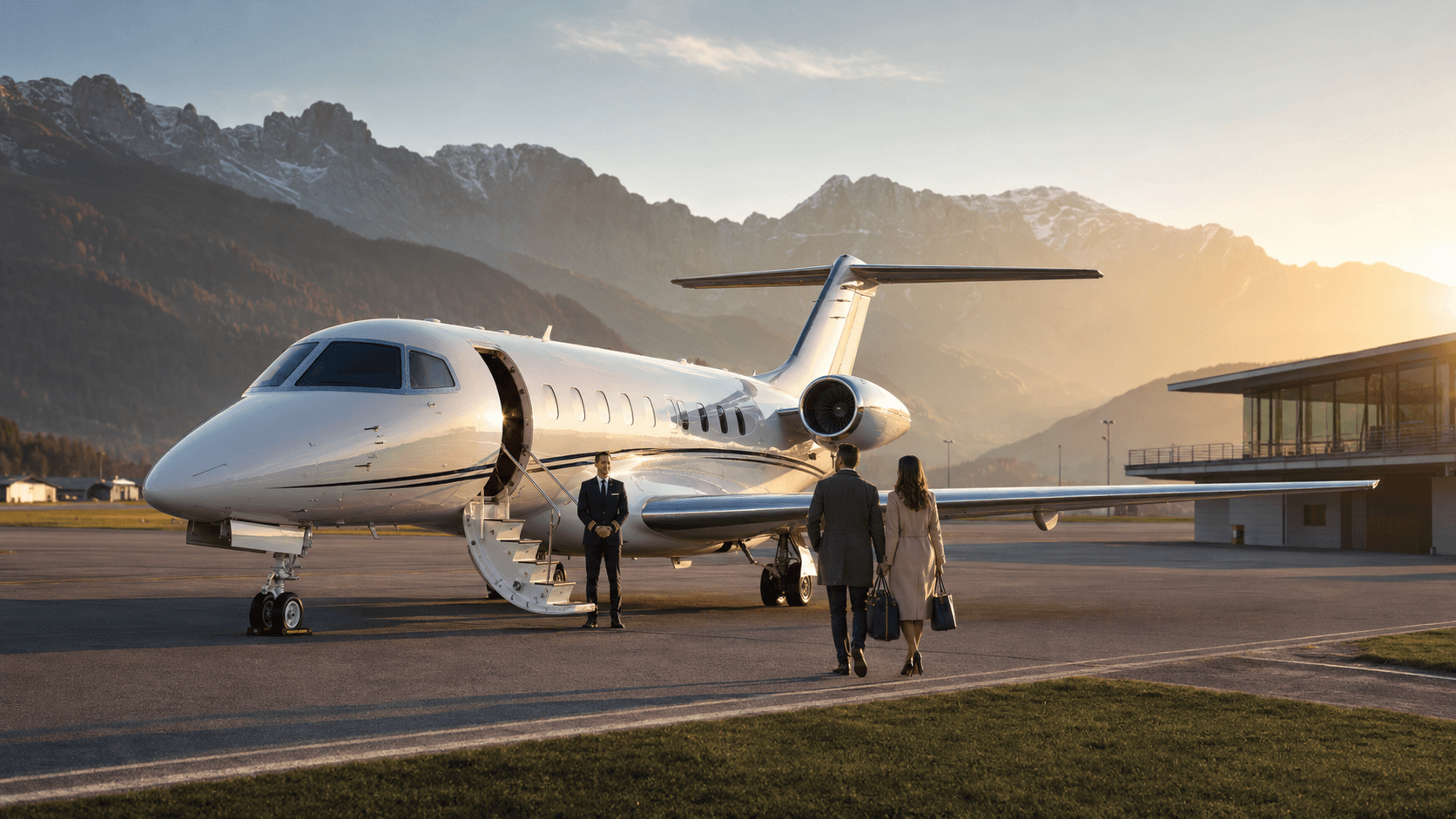
Europe represents one of the world's most dynamic and diverse aviation markets. With hundreds of business centers, luxury destinations, cultural capitals, and resort regions located within relatively short distances of one another, private aviation has become an increasingly attractive travel solution for executives, entrepreneurs, families, and leisure travelers seeking efficiency and flexibility.
Unlike transcontinental or intercontinental travel, European private aviation presents a unique set of operational requirements. Travelers frequently move between major cities such as London, Paris, Geneva, Milan, Madrid, and Munich, while also requiring access to smaller regional airports located near ski resorts, coastal destinations, and remote business facilities.
As a result, selecting the right aircraft is critical. The best aircraft for European travel is not necessarily the largest or most expensive option. Instead, the ideal choice depends on factors such as passenger count, route length, airport accessibility, baggage requirements, cabin preferences, and overall mission objectives.
Understanding which aircraft categories perform best within the European operating environment can help travelers maximize efficiency, comfort, and value.
Europe's geography creates a distinct private aviation landscape.
Many popular routes fall within flight times of one to three hours, making aircraft efficiency particularly important. Additionally, Europe's extensive network of regional airports allows private aircraft to bypass crowded commercial hubs and land significantly closer to final destinations.
Private aviation travelers often prioritize:
The aircraft best suited for European travel are those capable of balancing performance, operating efficiency, passenger comfort, and airport flexibility.
Before evaluating specific aircraft, travelers should consider several important factors.
Most European private aviation missions involve routes ranging from 300 to 1,500 nautical miles. Aircraft with excessive range capabilities may offer unnecessary capacity, resulting in higher operating costs.
Many desirable European destinations feature shorter runways or operational restrictions. Aircraft capable of operating from smaller airports provide greater flexibility.
Choosing an appropriately sized aircraft ensures optimal cost efficiency without compromising comfort.
Travelers visiting ski destinations, golf resorts, Mediterranean villas, or extended business engagements may require additional baggage space.
Although many European flights are relatively short, cabin comfort remains important, particularly for frequent travelers and executive teams.
For many European routes, light jets represent the optimal balance between performance and efficiency.
These aircraft are particularly well suited for:
Light jets typically accommodate six to eight passengers and provide sufficient range for most Western and Central European missions.
The Citation CJ3+ has earned a reputation as one of the most versatile light jets in private aviation.
Advantages include:
Its ability to access smaller airports makes it particularly attractive for European operations.
Frequently regarded as one of the most successful light jets ever produced, the Phenom 300 combines speed, comfort, and efficiency.
Its spacious cabin and excellent baggage capacity make it a popular choice among both business and leisure travelers.
Midsize aircraft are often considered the sweet spot for European business aviation.
They offer greater cabin comfort than light jets while maintaining strong operating economics for regional missions.
These aircraft are ideal for:
The Citation XLS+ remains one of the most requested charter aircraft in Europe.
Its popularity stems from:
For many European missions, the XLS+ provides an ideal combination of practicality and comfort.
Known for its speed and performance, the Learjet 60XR offers exceptional efficiency for executives traveling across Europe.
Its ability to connect major financial and commercial centers quickly makes it particularly attractive for business travel.
For travelers seeking additional space and range, super-midsize aircraft offer significant advantages.
These aircraft can comfortably connect virtually any two points in Europe while providing enhanced cabin environments suitable for extended work sessions and relaxation.
The Challenger 350 has become one of the most respected aircraft in the private aviation industry.
Its advantages include:
For corporate travelers and family groups, it represents one of the best all-around solutions for European travel.
The Citation Longitude combines modern technology, excellent fuel efficiency, and impressive passenger comfort.
Its quiet cabin and advanced avionics make it a highly attractive option for sophisticated travelers.
Although many European routes can be served effectively by smaller aircraft, heavy jets remain important for travelers combining European travel with intercontinental operations.
These aircraft are particularly useful when flying:
Heavy jets offer:
The Challenger 650 offers exceptional reliability and one of the largest cabins in its class.
Its versatility makes it popular among both corporate and leisure travelers.
Particularly well suited for European operations, the Falcon 900LX combines impressive range with excellent short-runway performance.
Its ability to access airports with operational limitations provides valuable flexibility throughout Europe.
Not every European trip requires a jet.
The Pilatus PC-12 continues to be one of the most practical aircraft operating throughout Europe.
Its strengths include:
The PC-12 is especially popular for travel to ski resorts, island destinations, and secondary business markets.
For shorter journeys, it often provides better overall value than larger jet aircraft.
Recommended aircraft:
These aircraft provide ideal work environments while offering excellent efficiency.
Recommended aircraft:
These options combine passenger comfort with generous baggage capacity.
Recommended aircraft:
These aircraft perform well at airports with shorter runways and mountainous operating environments.
Recommended aircraft:
Their efficiency and flexibility make them ideal for seasonal travel throughout Southern Europe.
Sustainability is becoming increasingly important in European aviation.
Many operators are investing in newer aircraft that offer:
Aircraft such as the Citation Longitude, Challenger 350, and Phenom 300 represent a new generation of business aircraft designed with environmental performance in mind.
As sustainability regulations continue to evolve across Europe, modern fleets are likely to play an increasingly important role in private aviation operations.
Today's private aviation travelers are increasingly influenced by technology when selecting aircraft.
Key considerations include:
Modern aircraft are effectively becoming flying offices and mobile meeting environments.
As digital connectivity continues to improve, technology will become an even more important factor in aircraft selection decisions.
The future of European private aviation will likely be shaped by three major trends:
Operators will continue optimizing fleets around fuel-efficient aircraft capable of serving a wide variety of mission profiles.
The adoption of Sustainable Aviation Fuel (SAF) and next-generation propulsion technologies will accelerate throughout the European market.
Digital booking platforms, aircraft management technologies, and innovative charter solutions will make private aviation more accessible and transparent.
These developments will further strengthen Europe's position as one of the world's most sophisticated private aviation markets.
Selecting the best aircraft for European travel requires balancing efficiency, comfort, flexibility, and operational requirements.
For short regional missions, aircraft such as the Phenom 300, Citation CJ3+, and Pilatus PC-12 provide exceptional value. For business travelers requiring greater cabin comfort and productivity, the Citation XLS+, Challenger 350, and Citation Longitude remain among the strongest options available. Meanwhile, travelers combining European and intercontinental missions may benefit from the extended capabilities of aircraft such as the Falcon 900LX and Challenger 650.
Ultimately, the ideal aircraft depends on the specific mission profile. By working with an experienced charter provider, travelers can identify the most appropriate aircraft for their needs while maximizing both efficiency and value.
As private aviation continues to evolve, Europe's diverse network of destinations, airports, and business centers will ensure that aircraft selection remains a critical component of successful travel planning.
The best aircraft depends on the mission, but the Citation XLS+, Challenger 350, and Phenom 300 are among the most popular choices.
Light jets offer excellent efficiency, airport accessibility, and operating economics for typical European flight distances.
The Citation XLS+, Challenger 350, and Citation Longitude are highly regarded for executive travel.
Yes. One of the major advantages of private aviation is access to thousands of regional and secondary airports.
Absolutely. The PC-12 is one of the most versatile and efficient aircraft operating throughout Europe.
The Pilatus PC-12, Citation CJ3+, and Falcon 900LX perform particularly well in mountainous regions.
Not always. Most European routes can be served efficiently by light, midsize, or super-midsize aircraft.
The Bombardier Challenger 350 is widely considered one of the leading super-midsize aircraft in the market.
Increasingly important. Business travelers often prioritize connectivity and productivity capabilities.
The Phenom 300 and Challenger 350 are excellent choices due to their comfort and baggage capacity.
Generally, yes. Modern aircraft typically offer improved fuel efficiency and lower emissions.
Factors such as passenger count, destination, baggage requirements, flight distance, and budget should all be considered when selecting an aircraft.