



Charter Flights

Empty Leg Flights
Available Fleet
Blog
Contacts


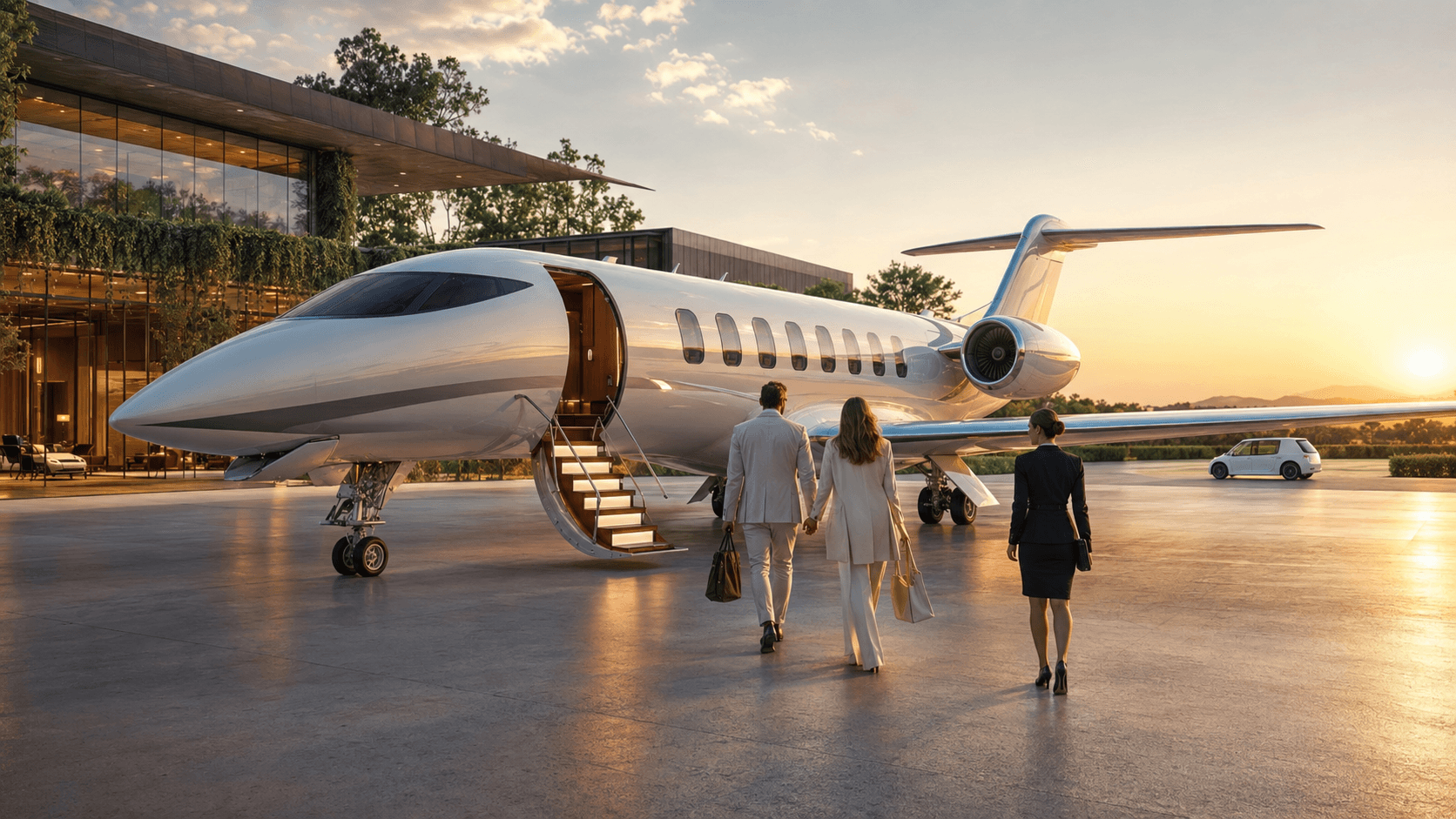
Luxury air travel is undergoing a profound transformation. For much of aviation history, luxury was defined by exclusivity, premium amenities, and visible expressions of comfort. Spacious cabins, fine dining, personalized service, and access to private terminals represented the pinnacle of the travel experience. While these attributes remain important, the future of luxury aviation is being shaped by a far broader set of expectations.
Today's affluent travelers increasingly prioritize experiences over possessions, efficiency over extravagance, and personalization over standardization. As global mobility becomes more complex and technological innovation accelerates, luxury air travel is evolving into a highly integrated ecosystem focused on convenience, wellness, sustainability, privacy, and operational flexibility.
The next generation of luxury aviation will not simply offer more sophisticated aircraft. It will redefine the relationship between travelers and transportation itself, creating seamless experiences tailored to individual lifestyles, professional responsibilities, and personal preferences.
Understanding these developments provides valuable insight into how private aviation is positioning itself at the forefront of modern luxury.
Consumer perceptions of luxury have changed significantly across multiple industries, and aviation is no exception.
Historically, luxury was often associated with material exclusivity. Premium travelers sought larger seats, superior catering, exclusive lounges, and visible indicators of status. While these elements continue to contribute to a premium experience, modern travelers increasingly define luxury through outcomes rather than amenities.
Today, luxury often means:
As a result, the future of luxury air travel will focus less on what passengers receive and more on how effectively travel supports their broader objectives.
Perhaps the most significant trend shaping luxury aviation is the growing demand for personalization.
Modern travelers increasingly expect every aspect of their journey to reflect their individual preferences. Generic premium services are gradually being replaced by highly customized experiences.
Future private aviation services may include:
Artificial intelligence and advanced data analytics will enable operators to anticipate traveler preferences and deliver increasingly refined experiences.
Rather than adapting to the travel environment, passengers will expect the travel environment to adapt to them.
Artificial intelligence is expected to become one of the most influential technologies shaping luxury aviation.
Future applications may include:
AI systems could automatically recommend schedule adjustments based on weather conditions, airport congestion, and passenger preferences.
Smart cabin technologies may learn individual preferences regarding temperature, lighting, seating configurations, and entertainment options.
Operators may anticipate passenger needs before requests are made, creating more seamless and intuitive travel experiences.
These technologies will allow luxury aviation providers to deliver unprecedented levels of convenience and personalization.
Passenger well-being is becoming a defining element of premium travel.
Research continues to highlight the effects of long-distance travel on physical and cognitive performance. In response, aircraft manufacturers are investing heavily in technologies designed to improve passenger health.
Future luxury cabins are likely to emphasize:
Enhanced filtration technologies will improve cabin air quality while reducing passenger fatigue.
Lower cabin altitudes can reduce physiological stress during extended flights.
Adaptive lighting systems will help regulate sleep patterns and minimize jet lag.
Cabin designs may increasingly incorporate spaces dedicated to relaxation, meditation, exercise, and recovery.
As travelers become more health-conscious, wellness will become an increasingly important component of luxury aviation.
Environmental responsibility is rapidly becoming a central consideration for affluent travelers.
Historically, luxury and sustainability were often viewed as competing priorities. Today, many consumers expect premium services to demonstrate environmental leadership.
Within aviation, future developments are likely to include:
The adoption of SAF represents one of the most promising pathways toward reducing aviation-related carbon emissions.
Manufacturers continue developing more efficient aircraft featuring:
Luxury travel providers may increasingly offer integrated carbon reporting and offset solutions.
Although still under development, hydrogen-powered and hybrid-electric aircraft may eventually influence the future of premium aviation.
The future of luxury will likely involve balancing exceptional travel experiences with responsible environmental stewardship.
Future luxury travelers will evaluate journeys holistically rather than focusing solely on the flight itself.
As a result, private aviation providers are increasingly evolving into mobility service providers.
Future travel experiences may integrate:
The objective will be to create frictionless travel ecosystems that minimize logistical complexity.
Luxury will increasingly be measured by the absence of inconvenience.
Connectivity has become a fundamental requirement for modern travelers.
Business leaders, investors, entrepreneurs, and family office principals often remain engaged with global operations regardless of location.
Future aircraft are expected to offer:
These capabilities will transform aircraft into fully functional mobile offices capable of supporting global operations during flight.
For many travelers, uninterrupted connectivity will become as important as physical comfort.
Cabin technology is evolving rapidly.
Future aircraft interiors may function similarly to smart homes, allowing passengers to control virtually every aspect of their environment through integrated digital platforms.
Potential features include:
These technologies will enable unprecedented levels of passenger control and convenience.
Luxury will increasingly be defined by intuitive and effortless experiences.
As public visibility and digital exposure continue to increase, privacy is becoming one of the most valuable aspects of luxury travel.
Future private aviation services will likely place even greater emphasis on:
For executives, investors, public figures, and families, privacy will remain a critical component of premium travel experiences.
In many respects, privacy may become the defining luxury asset of the digital era.
The development of ultra-long-range business aircraft continues to reshape global mobility.
Modern aircraft already connect major international cities nonstop, but future designs are expected to extend these capabilities even further.
Benefits include:
For globally active individuals and organizations, the ability to move rapidly across continents will remain one of the most valuable advantages of private aviation.
Luxury increasingly involves freedom of movement without geographic limitations.
Despite rapid technological advancement, luxury aviation will continue to rely heavily on human expertise.
Personal relationships, professional judgment, and exceptional service remain irreplaceable components of premium travel.
Future luxury providers will combine advanced technologies with highly trained professionals capable of delivering:
Technology will enhance service delivery, but human expertise will remain central to the luxury experience.
Private aviation is increasingly becoming integrated into broader lifestyle strategies.
For many travelers, aircraft are no longer viewed simply as transportation tools. Instead, they support:
The future of luxury aviation will likely emphasize this broader lifestyle role, positioning aircraft as platforms that enable opportunity, flexibility, and personal freedom.
Looking ahead, the luxury travel experience of 2035 may include:
These innovations will create travel experiences that are more efficient, intuitive, and personalized than ever before.
The fundamental objective will remain unchanged: enabling travelers to focus on their priorities while minimizing the complexities of movement.
The future of luxury air travel extends far beyond premium amenities and elegant interiors. It is being shaped by a convergence of technology, sustainability, wellness, personalization, privacy, and operational efficiency. Modern travelers increasingly seek experiences that save time, reduce friction, enhance well-being, and support global lifestyles.
Private aviation is uniquely positioned to lead this transformation. By combining advanced aircraft, intelligent technologies, personalized service, and seamless mobility solutions, the industry is redefining what luxury means in the twenty-first century.
At Hera Flight, we believe that the future of luxury is not simply about traveling in greater comfort - it is about traveling with greater freedom, flexibility, and purpose. As aviation continues to evolve, the most successful providers will be those that create experiences designed around the individual, transforming travel from a necessity into a strategic advantage.
The future of luxury air travel has already begun, and it promises to be more personalized, connected, and transformative than ever before.