


Charter Flights

Available Fleet

Blog
Contacts


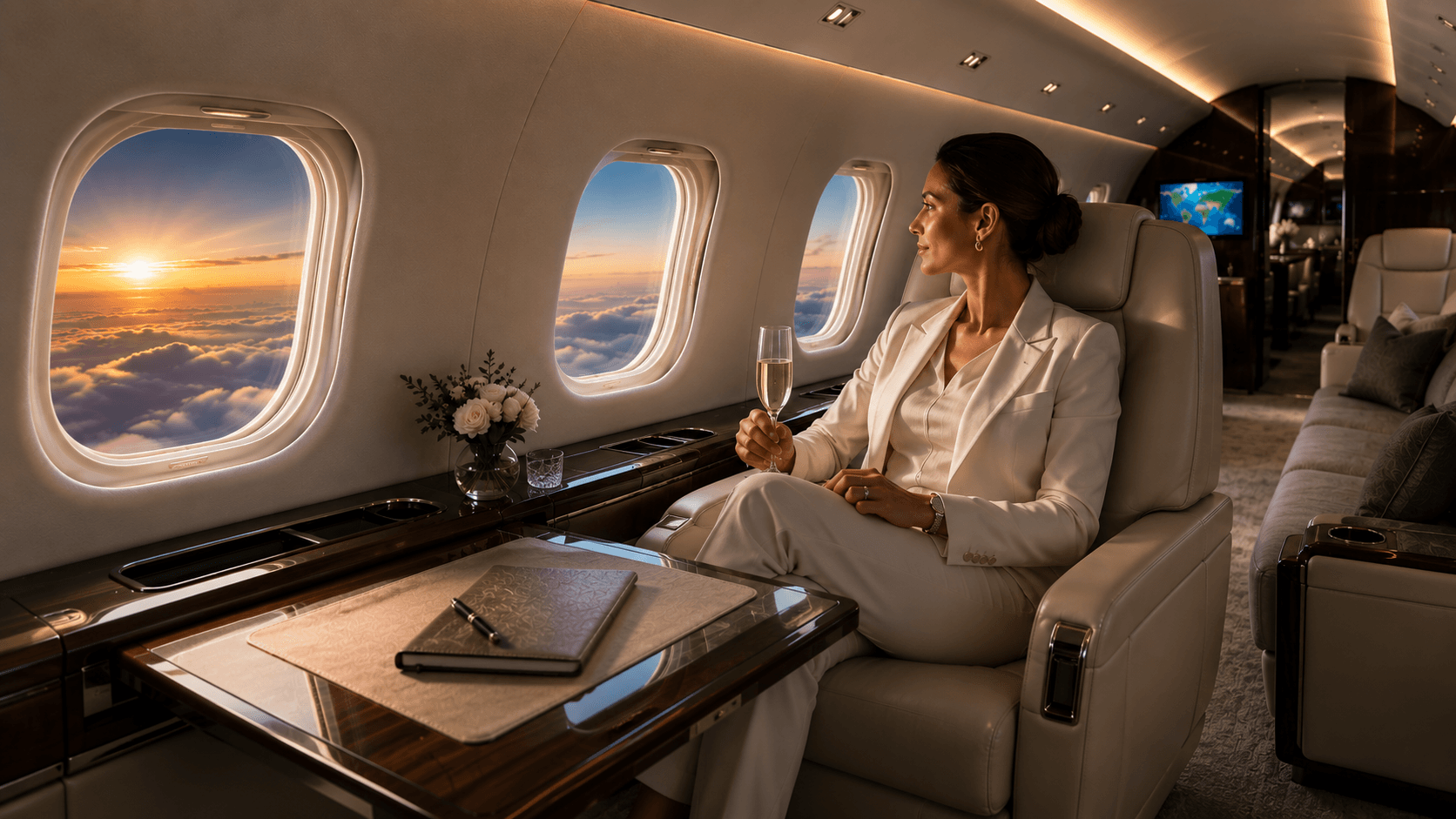
For decades, luxury in air travel was defined by visible markers of exclusivity. Spacious first-class cabins, gourmet dining, premium champagne, private lounges, and personalized service represented the highest standards of aviation comfort. While these elements remain important, the modern concept of luxury has evolved significantly. Today’s affluent travelers increasingly value experiences that extend beyond material indulgence, prioritizing efficiency, privacy, flexibility, personalization, and control over their journeys.
This transformation reflects broader societal changes. In an era characterized by global connectivity, demanding professional schedules, and increasing concerns regarding privacy and security, luxury is no longer measured solely by opulence. Instead, it is increasingly defined by the ability to optimize time, minimize inconvenience, and create highly personalized travel experiences tailored to individual needs.
Private aviation has emerged as the clearest expression of this evolving definition of luxury. For business leaders, entrepreneurs, family offices, and discerning leisure travelers, private air travel offers advantages that transcend traditional notions of premium service. It delivers a level of autonomy and convenience that is increasingly viewed as the ultimate luxury in modern transportation.
Historically, luxury travel was associated with exclusivity and visible status symbols. First-class cabins on commercial airlines represented the pinnacle of comfort, offering enhanced seating, superior dining experiences, and dedicated airport services.
However, as premium airline products became more widely available, the distinction between luxury and convenience began to shift. Travelers with significant professional responsibilities or complex personal schedules increasingly recognized that the greatest limitation of commercial aviation was not the quality of the seat but the lack of control over the travel experience.
Airport congestion, rigid schedules, lengthy security procedures, flight delays, and crowded terminals consume valuable time and introduce uncertainty into even the most carefully planned itineraries.
As a result, modern luxury has become less about extravagance and more about eliminating friction.
Among all contemporary luxury assets, time has become perhaps the most valuable.
Successful executives, entrepreneurs, investors, and high-net-worth individuals often manage demanding schedules spanning multiple cities, countries, and time zones. Every hour lost to travel inefficiencies represents an opportunity cost.
Private aviation addresses this challenge directly by significantly reducing the time associated with air travel.
Key advantages include:
By eliminating many of the inefficiencies associated with commercial travel, private aviation allows travelers to reclaim hours that would otherwise be lost in transit.
In this context, luxury is no longer defined by what is provided during the journey but by how much time the journey saves.
Privacy has become an increasingly important consideration in the digital age.
Corporate executives routinely discuss confidential business matters while traveling. Investors evaluate transactions involving sensitive information. Public figures seek protection from unwanted attention, while families value discretion and personal space.
Commercial travel environments offer limited privacy, even in premium cabins. Travelers remain surrounded by other passengers, airport personnel, and public spaces.
Private aviation creates an entirely different environment.
Passengers benefit from:
The ability to conduct meetings, discuss strategic initiatives, or simply travel without public exposure represents a significant component of modern luxury.
Traditional luxury often emphasized attentive service. Modern luxury extends this concept further by prioritizing complete personalization.
Today's private aviation clients increasingly expect experiences tailored specifically to their preferences.
Personalization may include:
Rather than adapting to a standardized travel product, passengers benefit from a travel environment designed around their individual requirements.
This shift reflects a broader trend across luxury industries, where customization increasingly outweighs standardization as a measure of value.
Modern business and personal travel frequently involve dynamic schedules.
Meetings may conclude earlier than expected. Investment opportunities may emerge unexpectedly. Family plans may change with little notice.
Commercial airline schedules offer limited flexibility in responding to these circumstances.
Private aviation provides a fundamentally different level of adaptability.
Travelers can:
This operational flexibility enables travelers to respond rapidly to evolving circumstances while maintaining control over their schedules.
In many respects, flexibility has become one of the defining characteristics of luxury travel.
The modern luxury traveler increasingly prioritizes health and well-being.
Long-distance travel can produce fatigue, dehydration, disrupted sleep patterns, and reduced productivity. Consequently, aircraft manufacturers and operators have invested heavily in creating healthier cabin environments.
Contemporary business aircraft often feature:
These improvements reduce travel fatigue and enhance passenger comfort, particularly on long-range flights.
Luxury is no longer measured solely by comfort during the flight but also by how travelers feel upon arrival.
Today's travelers increasingly evaluate journeys holistically rather than focusing solely on the flight itself.
A truly luxurious travel experience encompasses every stage of the journey, including:
Private aviation excels at delivering integrated travel experiences in which each component is carefully coordinated to minimize inconvenience and maximize efficiency.
The objective is not merely to provide transportation but to create a seamless mobility solution.
Technology plays an increasingly important role in shaping luxury travel expectations.
High-net-worth individuals and corporate leaders often require uninterrupted connectivity throughout their journeys.
Modern private aircraft frequently provide:
These technologies enable passengers to remain productive, informed, and connected regardless of location.
The ability to work effectively while traveling has become a critical component of contemporary luxury.
Security has emerged as another defining element of luxury travel.
For many travelers, peace of mind is itself a luxury. Knowing that travel arrangements are managed professionally and securely contributes significantly to the overall experience.
Private aviation enhances security through:
These measures are particularly valuable for executives, public figures, diplomats, and families seeking greater control over their travel environments.
The definition of luxury is also evolving in response to growing environmental awareness.
Today's travelers increasingly seek experiences that align with their values while maintaining high standards of quality and convenience.
Within private aviation, sustainability initiatives include:
Responsible luxury increasingly involves balancing comfort and convenience with environmental stewardship.
As sustainability becomes more important across all sectors, it is likely to play an increasingly prominent role in the future of luxury travel.
Perhaps the most significant evolution in luxury air travel is the shift from viewing private aviation as a transportation service to viewing it as a lifestyle enabler.
Private aircraft facilitate:
Rather than simply moving passengers between destinations, private aviation supports the lifestyles and objectives of individuals whose activities span multiple regions and time zones.
In this sense, luxury is no longer defined by what occurs during the flight itself but by the opportunities the flight makes possible.
The future of luxury air travel will likely continue emphasizing personalization, efficiency, and seamless integration.
Emerging trends include:
These innovations will further reinforce the shift from traditional luxury markers toward experiences centered on convenience, control, and personal empowerment.
The concept of luxury in air travel has undergone a profound transformation. While premium amenities and exceptional service remain important, they are no longer sufficient to define true luxury. Today's travelers increasingly value time, privacy, flexibility, personalization, wellness, security, and seamless mobility.
Private aviation embodies these priorities by offering a travel experience designed around the passenger rather than the transportation system. It eliminates unnecessary complexity, enhances productivity, and provides a level of control that is increasingly rare in modern travel.
At Hera Flight, we recognize that luxury is no longer about excess—it is about creating experiences that maximize value, freedom, and peace of mind. As the expectations of global travelers continue to evolve, private aviation remains at the forefront of redefining what luxury truly means in the twenty-first century.