



Charter Flights

Empty Leg Flights
Available Fleet
Blog
Contacts


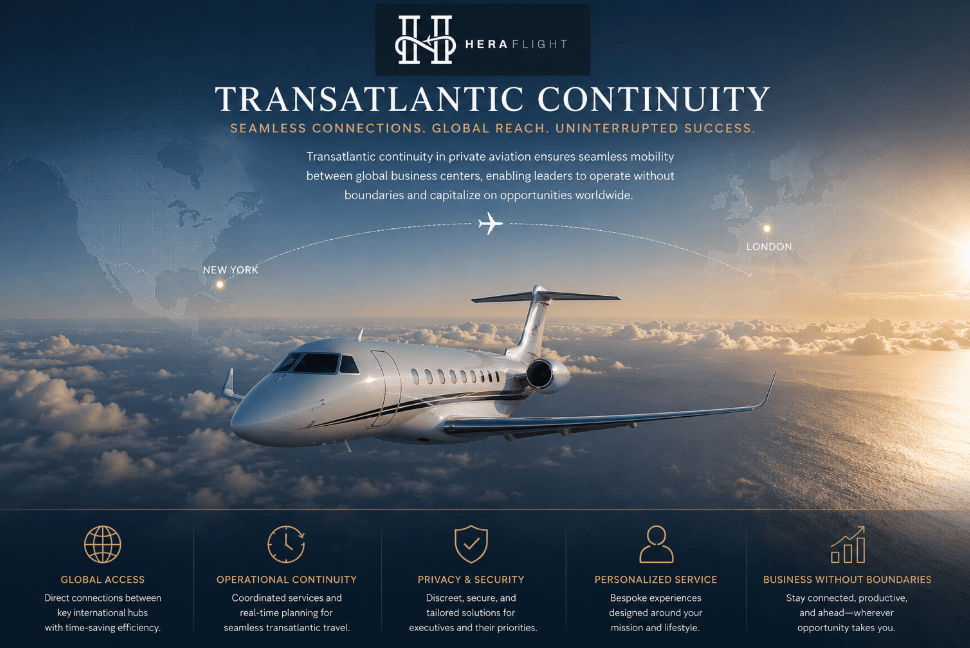
New York and Monaco occupy distinct yet deeply interconnected positions within the global architecture of wealth, finance, luxury mobility, and executive influence. One represents the world’s most powerful concentration of institutional finance and corporate infrastructure, while the other functions as one of the densest ecosystems of private wealth, luxury residency, yachting culture, and elite financial preservation.
Although separated by the Atlantic Ocean, these two markets are increasingly linked through continuous private aviation activity that supports investment coordination, family office management, luxury real estate operations, seasonal migration, and international business continuity.
Private aviation plays a foundational role within this relationship because it enables high-net-worth individuals, executives, investors, legal advisors, and global entrepreneurs to maintain operational continuity between two exceptionally high-value economic ecosystems operating across different cultural and regulatory environments.
The New York–Monaco corridor increasingly reflects broader transformations in global wealth mobility, in which geography becomes secondary to connectivity, scheduling precision, and uninterrupted access to strategic international networks.
New York as a Global Financial Command Center
New York remains one of the world’s dominant centers for:
The city operates within a high-velocity economic environment where executives manage continuous flows of transactions, negotiations, and multinational coordination.
Private aviation supports this ecosystem by preserving time efficiency and operational flexibility for globally mobile decision-makers.
Monaco and the Geography of Wealth Stability
Monaco represents a different but complementary form of economic concentration.
The principality is globally associated with:
Many globally mobile individuals maintain operational ties to both New York’s financial systems and Monaco’s wealth management environment.
This dual structure generates sustained demand for transatlantic executive mobility.
Multi-Jurisdictional Executive Living
Modern ultra-high-net-worth individuals increasingly operate across multiple international jurisdictions.
Many maintain:
Private aviation enables these globally distributed systems to operate continuously and with reduced operational friction.
Continuity Beyond Transportation
The New York–Monaco aviation corridor supports more than simple travel.
It enables continuity between:
Mobility becomes integrated into broader structures of wealth management and executive coordination.
Teterboro as New York’s Executive Gateway
Teterboro Airport functions as one of the primary private aviation hubs serving Manhattan and the broader New York financial ecosystem.
Its strategic value comes from:
Teterboro plays a critical role within transatlantic executive mobility networks.
Nice Côte d’Azur Airport and Monaco Access
Because Monaco lacks its own airport, Nice Côte d’Azur Airport serves as the principality's principal aviation gateway.
Private aviation travelers frequently rely upon:
This integrated structure allows efficient access between aircraft, Monaco residences, yachts, and luxury hospitality environments.
Winter and Summer Aviation Cycles
The New York–Monaco corridor reflects strong seasonal mobility trends.
During colder months, travelers may shift between:
During summer periods, mobility frequently concentrates around:
Private aviation supports these recurring seasonal migration systems while maintaining executive flexibility.
Event-Driven Aviation Demand
Major international events also intensify transatlantic aviation activity.
Examples include:
These gatherings create highly concentrated mobility patterns linking financial capital with luxury cultural environments.
Confidentiality in High-Visibility Ecosystems
Both New York and Monaco operate within environments characterized by concentrated wealth, media attention, and high-profile public visibility.
Private aviation supports discretion through:
This privacy infrastructure is especially important for executives, investors, celebrities, and family offices managing sensitive operations.
Mobility as Strategic Risk Management
Controlled transportation environments help reduce:
In elite global markets, mobility itself increasingly functions as part of a broader risk-management strategy.
Managing International Financial Schedules
The New York–Monaco corridor operates across multiple time zones and highly compressed business cycles.
Executives frequently coordinate:
Private aviation minimizes scheduling inefficiencies and supports continuous operational responsiveness.
Productivity Through Controlled Mobility
Long-haul private aviation environments support executive productivity through:
This controlled environment allows passengers to preserve cognitive efficiency during intercontinental travel.
Ultra-Long-Range Fleet Requirements
The New York–Monaco corridor requires aircraft capable of:
Operators serving this market often rely upon:
Fleet capability significantly influences operational reliability and passenger continuity.
Precision in International Scheduling
Transatlantic executive aviation requires careful coordination involving:
Operational precision becomes particularly important within high-density luxury markets such as Monaco.
AI-Assisted Operational Coordination
Artificial intelligence increasingly supports transatlantic aviation planning through:
These systems improve operational continuity across highly complex international routes.
Integrated Luxury Mobility Ecosystems
Digital coordination platforms increasingly integrate:
The result is a seamless mobility ecosystem that supports globally mobile, high-net-worth lifestyles.
Environmental Pressure on Long-Haul Aviation
Transatlantic private aviation faces increasing scrutiny regarding:
As environmental awareness grows, operators increasingly invest in:
Smarter and More Efficient Global Mobility
Future transatlantic aviation systems will likely emphasize:
These developments aim to balance luxury mobility with evolving expectations for environmental responsibility.
The Integration of Finance and Luxury
The New York–Monaco aviation corridor reflects the increasing convergence of:
Private aviation enables these interconnected systems to operate with continuity and precision.
The Future of Transatlantic Executive Mobility
As wealth becomes increasingly internationalized and geographically flexible, the relationship between New York and Monaco will likely continue strengthening through highly adaptive aviation infrastructure.
Future private aviation networks will increasingly prioritize:
The transatlantic corridor between New York and Monaco therefore, represents more than a travel route — it reflects the evolving structure of global wealth mobility itself.
Why are New York and Monaco connected through private aviation?
Both cities serve as major global centers of finance, wealth management, luxury real estate, and executive mobility, driving strong transatlantic travel demand.
Why is private aviation important on this route?
Private aviation provides flexibility, confidentiality, operational efficiency, and nonstop long-haul connectivity between two high-value economic ecosystems.
Which airports primarily support this corridor?
Teterboro Airport serves New York executive aviation traffic, while Nice Côte d’Azur Airport functions as Monaco’s primary aviation gateway.
Why do high-net-worth individuals travel frequently between New York and Monaco?
Many maintain international residences, family offices, investment portfolios, and seasonal lifestyles distributed across multiple global jurisdictions.
How does private aviation improve executive productivity?
Private aviation reduces travel friction, supports flexible scheduling, and creates controlled environments for work, communication, and recovery during long-haul flights.
What role does Monaco play in wealth preservation?
Monaco is globally recognized for luxury residency, wealth management infrastructure, family offices, and favorable financial conditions for affluent individuals.
How does technology improve transatlantic aviation operations?
AI-assisted systems optimize routing, scheduling, airport coordination, weather analysis, and passenger logistics across complex international operations.
Why is privacy important within this corridor?
Executives, investors, celebrities, and family offices frequently require confidential travel environments to protect sensitive operations and reduce public exposure.
Is sustainability becoming important in transatlantic private aviation?
Yes. Operators increasingly prioritize sustainable aviation fuel, fleet modernization, emissions reduction strategies, and smarter operational efficiency systems.