



Charter Flights

Empty Leg Flights
Available Fleet
Blog
Contacts


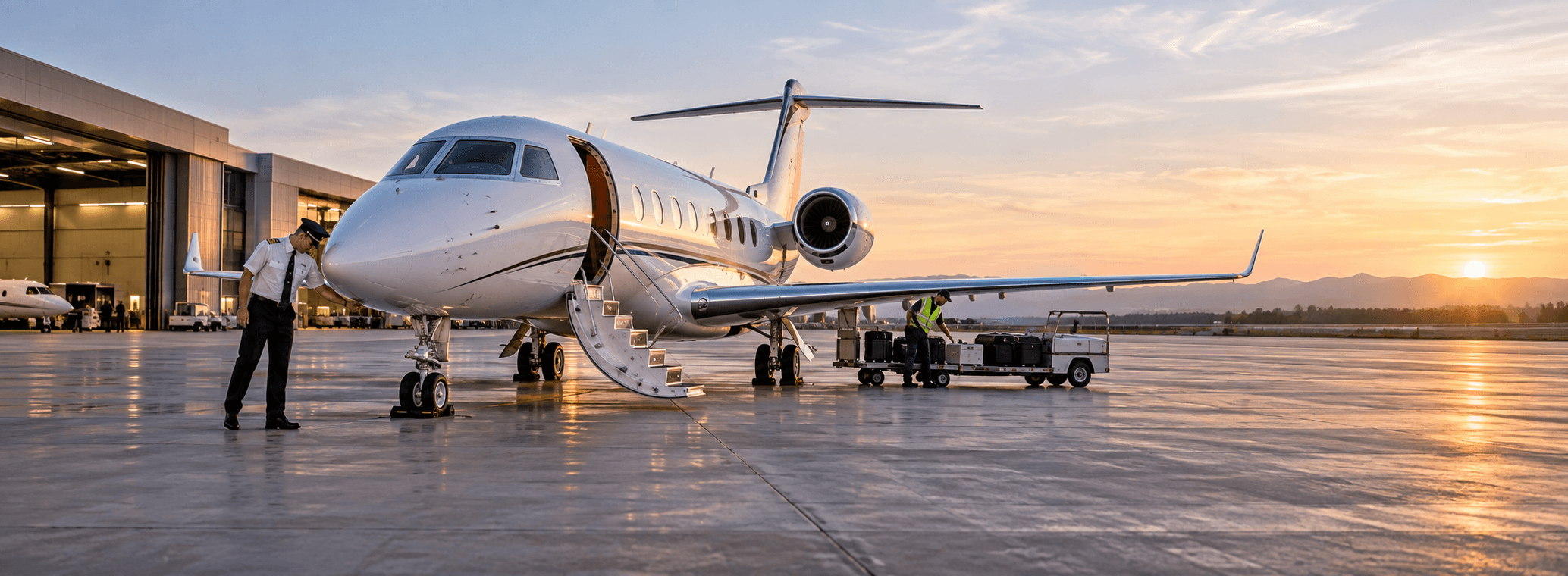
Private jet travel is designed to feel effortless from the passenger’s perspective. Travelers arrive at a private terminal, board the aircraft, settle into the cabin, and depart without many of the delays associated with commercial aviation.
Behind that smooth experience, however, is a detailed operational process. Long before the passengers arrive, pilots, dispatchers, maintenance teams, ground handlers, and service providers are already working to prepare the aircraft and confirm that every element of the flight is ready.
Every private flight starts with planning. The operator reviews the requested route, departure time, destination, passenger count, aircraft type, and any special requirements.
The flight crew or operations team then evaluates expected flight time, fuel requirements, alternate airports, airspace restrictions, weather conditions, and airport operating hours. For international flights, the planning process may also involve overflight permissions, customs coordination, immigration requirements, and destination-specific documentation.
Before departure, crews review conditions at the departure airport, along the route, and at the destination. They may evaluate wind, visibility, thunderstorms, turbulence, icing conditions, cloud cover, and expected changes during the flight.
Alternative airports may also be identified in case conditions at the planned destination deteriorate. Weather planning can affect routing, fuel requirements, flight time, and passenger comfort.
Before any flight, the operator must confirm that the aircraft is ready for service. Maintenance records and current aircraft status are reviewed to ensure that required inspections have been completed and that no unresolved technical issue prevents the flight.
Pilots also conduct a preflight inspection, checking the exterior, tires, control surfaces, fluid levels, engines, lights, and other visible systems. Inside the cockpit, aircraft systems are checked again before departure.
Private jets are not simply filled with as much fuel as possible before every flight. The amount carried is calculated based on the route, aircraft weight, weather, expected winds, alternate airport requirements, and required reserves.
Carrying unnecessary fuel adds weight and can affect aircraft performance and efficiency. For flights involving short runways or high temperatures, weight may require particularly careful planning.
The number of travelers and the amount of baggage can affect aircraft weight and balance. Before departure, the crew needs to know how many passengers will be onboard and how much luggage they are bringing.
Oversized items such as golf clubs, skis, equipment cases, or unusually heavy baggage may require additional planning. Accurate information helps ensure that the aircraft remains within its performance limits.
While pilots focus on flight operations, other team members prepare the cabin. The aircraft may be cleaned, stocked with beverages, and arranged according to passenger preferences.
Catering can be delivered and stored before departure. Special requests may involve particular meals, children's items, pet arrangements, newspapers, beverages, or other amenities.
Private aircraft rely on ground teams for fueling, towing, parking, baggage handling, lavatory servicing, water service, and assistance with passenger vehicles. At some airports, a fixed-base operator, or FBO, coordinates many of these services.
The aircraft may also need to be moved from a hangar to the departure area before passengers arrive. Ground handling becomes more complex at busy airports or during major events when ramp space and parking are limited.
Pilots review the flight plan, weather, aircraft status, airport information, and operational notices. They may also discuss departure procedures, expected conditions, fuel planning, and potential operational concerns.
Crew members must also confirm that they remain within applicable duty and rest requirements. If the crew cannot legally complete the planned operation within those limits, the schedule may need to be adjusted before departure.
Temporary restrictions, military activity, congestion, airport closures, runway construction, and other factors may affect the planned route. Busy airports may require arrival or departure slots, particularly during major events or periods of heavy demand.
If restrictions apply, the operator may need to adjust the flight time or choose another airport.
International private travel can involve significantly more preparation than a domestic flight. Passenger passports and travel documentation may need to be reviewed. Customs and immigration arrangements must be coordinated, and some destinations require advance passenger information before arrival.
The operator may also need landing permits, overflight permissions, or handling arrangements in foreign countries.
Before takeoff, the crew confirms that the aircraft is within approved weight and balance limits. This calculation considers fuel, passengers, baggage, and other items onboard.
Where that weight is positioned also matters. An aircraft can be below its maximum weight but still require adjustments if the load is distributed incorrectly.
As departure approaches, the pilots complete cockpit checklists and prepare the aircraft systems. Navigation and communication equipment is configured, the flight plan is confirmed, and engine-start procedures are prepared.
After passengers board, doors and baggage compartments are secured. Only after all required checks are complete does the aircraft begin taxiing toward the runway.
The convenience of private flying comes from extensive work behind the scenes. Pilots, operations teams, maintenance professionals, ground handlers, and service providers each play a role in preparing the aircraft.
When the process works well, passengers experience only the result: an aircraft ready to depart, a prepared cabin, and a flight designed around their itinerary. That seamless experience is the product of detailed planning, communication, and operational discipline before the aircraft ever leaves the ground.